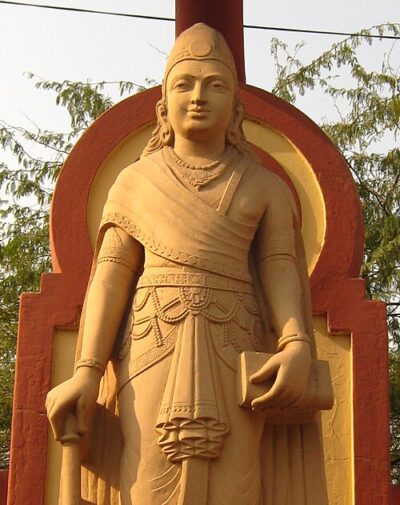
Taxila
Taxila is an archaeological site.
- Located in
- Rawalpindi District (1849–)
- Country
- Pakistan (1947–)
- What it is
- archaeological site
All 3 facts, and where they come from
Facts
3 facts · 0 confirmed by two sources · 0 cited · 3 from one source
Where this comes from
Papalocal keeps its own record. It started from these sources; what each one said is kept here as it was copied, so a change on their side never changes this page by itself. Tap one to read its version.
What Wikidata says · copied November 17, 2026 · revision 2564151572
- Described as
- archaeological site of the ancient Indian subcontinent, at Taxila, Punjab, Pakistan
- Other names
- Mint of Taxila
- What it is
- archaeological site
- Located in
- Rawalpindi District (1849–)
- Country
- Pakistan (1947–)
- Wikipedias with a page
- 74
Wikidata item Q156093 (wikidata.org/wiki/Q156093), public domain (CC0). Copied 2026-11-17.
What Wikipedia says · copied November 17, 2026 · revision 1386048870
Taxila (Punjabi: ٹيکسلا, romanized: Ṭeksilā; Urdu: تکشیلا, romanized: Takshila), historically known as Takṣaśilā, is a city and a World Heritage Site in the Rawalpindi District of Punjab, Pakistan. Founded around c. 1000 BC, it is one of the oldest cities in Asia, and has a population of over 136,900 as of 2023.
Situated on the eastern bank of the Indus River — the pivotal junction of the South Asia and Central Asia — it was possibly founded around 1000 BCE. Ancient Taxila, along with Puṣkalāvatī, was one of the capitals of the Gandhāra civilisation. The city has been suggested to be the capital of the Achaemenid province of Hinduš during c. 500 – c. 330 BCE. It is named in the writings of Pāṇini and its king, called Taxiles by the ancient Greeks, readily recognised the suzerainty of Alexander the Great in 326 BCE once he appeared on the scene after overthrowing the Achaemenids. Mauryans took over the city in the following decades, and as per Buddhist texts, Ashoka was the governor at Taxila before becoming king. Some scholars consider the conventionally called University of ancient Taxila to be one of the earliest universities or education centres in Asia.
In the following centuries, the Indo-Greeks, the Indo-Scythians, the Indo-Parthians and the Kushans successively made Taxila their capital and left architectural marks here. The invading Hunas devastated Taxila in the 5th century, and during his pilgrimage, the 7th-century Chinese monk Xuanzang described it as a city in decline, eventually fading into obscurity. In the mid-19th century, ruins of ancient Taxila were rediscovered by British archaeologist Alexander Cunningham and extensively excavated by Sir John Marshall. In 1980, UNESCO designated Taxila as a World Heritage Site.
Taxila is located within the Taxila Tehsil, on the Pothohar Plateau of northern Punjab, and lies approximately 25 kilometres (16 mi) northwest of the Islamabad–Rawalpindi metropolitan area and is just south of the Haripur District of Khyber Pakhtunkhwa. It is one of Punjab's popular tourist spots, attracting up to one million tourists every year.
From the Wikipedia article “Taxila” (en.wikipedia.org/wiki/Taxila), by its contributors, under CC BY-SA 4.0 (creativecommons.org/licenses/by-sa/4.0/). Copied 2026-11-17; not changed.
Confirmed Two sources agree. Cited One source, and it names where it got it. One source One source, without a reference of its own. Sources disagree The sources disagree. We show the best-supported value and keep theirs below.
Picture: Wikimedia Commons: Double-Headed Eagle Stupa at Sirkap 08.jpg · See Commons file page