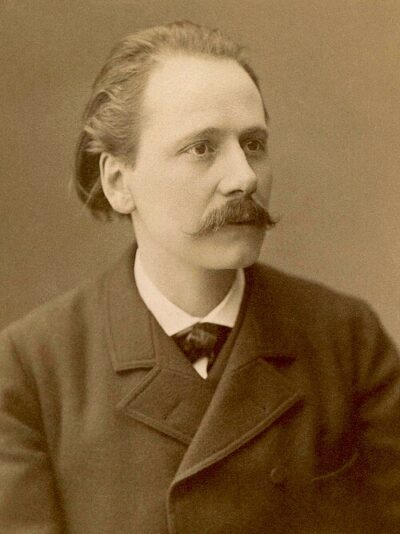
Thaïs
Thaïs is an opera by Jules Massenet. It came out in 1894.
- Released
- 19th century
- Came out
- 1894
- Genre
- commedia lirica
All 7 facts, and where they come from
Facts
7 facts · 0 confirmed by two sources · 0 cited · 7 from one source
Where this comes from
Papalocal keeps its own record. It started from these sources; what each one said is kept here as it was copied, so a change on their side never changes this page by itself. Tap one to read its version.
What Wikidata says · copied November 17, 2026 · revision 2529015478
- Described as
- opera by Jules Massenet
- What it is
- dramatico-musical work
- Music by
- Jules Massenet
- Genre
- commedia lirica
- Released
- 19th century
- Language
- French
- Based on
- Thaïs
- Came out
- 1894
- Wikipedias with a page
- 21
Wikidata item Q1144467 (wikidata.org/wiki/Q1144467), public domain (CC0). Copied 2026-11-17.
What Wikipedia says · copied November 17, 2026 · revision 1369354259
Thaïs (French pronunciation: [ta.is]) is an opera, a comédie lyrique in three acts and seven tableaux, by Jules Massenet to a French libretto by Louis Gallet, based on the novel Thaïs by Anatole France. It was first performed at the Opéra Garnier in Paris on 16 March 1894, starring the American soprano Sibyl Sanderson, for whom Massenet had written the title role. The original production was directed by Alexandre Lapissida, with costumes designed by Charles Bianchini and sets by Marcel Jambon (act 1, scene 1; act 3) and Eugène Carpezat (act 1, scene 2; act 2). The opera was later revised by the composer and was premiered at the same opera house on 13 April 1898.
The work was first performed in Italy at the Teatro Lirico Internazionale in Milan on 17 October 1903 with Lina Cavalieri in the title role and Francesco Maria Bonini as Athanaël. In 1907, the role served as Mary Garden's American debut in New York in the U.S. premiere performance.
Thaïs takes place in Egypt under the rule of the Roman Empire, where a Cenobite monk, Athanaël, attempts to convert Thaïs, an Alexandrian courtesan and devotee of Venus, to Christianity, but discovers too late that his obsession with her is rooted in lust; while the courtesan's true purity of heart is revealed, so is the religious man's baser nature. The work is often described as bearing a sort of religious eroticism, and has had many controversial productions. Its famous Méditation, the entr'acte for violin and orchestra played between the scenes of act 2, is an oft-performed concert music piece; it has been arranged for many different instruments.
The role of Thaïs, similar to another Massenet heroine also written for Sibyl Sanderson, Esclarmonde, is notoriously difficult to sing and is reserved for only the most gifted of performers. Modern interpreters have included Carol Neblett, Anna Moffo, Beverly Sills, Leontyne Price, Renée Fleming, and Elizabeth Futral. Géori Boué was the first to record the opera, in 1952.
From the Wikipedia article “Thaïs (opera)” (en.wikipedia.org/wiki/Thaïs_(opera)), by its contributors, under CC BY-SA 4.0 (creativecommons.org/licenses/by-sa/4.0/). Copied 2026-11-17; not changed.
Confirmed Two sources agree. Cited One source, and it names where it got it. One source One source, without a reference of its own. Sources disagree The sources disagree. We show the best-supported value and keep theirs below.
Picture: Wikimedia Commons: Manuel Orazi - Jules Massenet - Thaïs - Original.jpg · See Commons file page