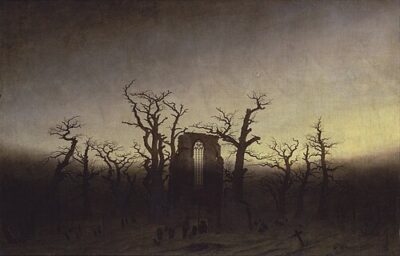
The Abbey in the Oakwood
The Abbey in the Oakwood is a painting by Caspar David Friedrich, Alte Nationalgalerie, Berlin.
- Came out
- 1800s
- Created by
- Caspar David Friedrich
- Genre
- landscape painting
All 6 facts, and where they come from
Facts
6 facts · 0 confirmed by two sources · 4 cited · 2 from one source
Where this comes from
Papalocal keeps its own record. It started from these sources; what each one said is kept here as it was copied, so a change on their side never changes this page by itself. Tap one to read its version.
What Wikidata says · copied November 17, 2026 · revision 2568693463
- Described as
- painting by Caspar David Friedrich, Alte Nationalgalerie, Berlin
- What it is
- painting · 1 reference
- Created by
- Caspar David Friedrich · 1 reference
- Genre
- landscape painting
- Came out
- 1800s · 1 reference
- Owned by
- Frederick William III of Prussia (1810–); Prussian Cultural Heritage Foundation (1957–) · 1 reference
- Wikipedias with a page
- 28
Wikidata item Q334360 (wikidata.org/wiki/Q334360), public domain (CC0). Copied 2026-11-17.
What Wikipedia says · copied November 17, 2026 · revision 1368861378
The Abbey in the Oakwood (German: Abtei im Eichwald) is an oil painting by the German Romantic artist Caspar David Friedrich. It was painted between 1809 and 1810 in Dresden and was first shown together with the painting The Monk by the Sea in the Prussian Academy of Arts exhibition of 1810. On Friedrich's request The Abbey in the Oakwood was hung beneath The Monk by the Sea. This painting is one of over two dozen of Friedrich's works that include cemeteries or graves.
After the exhibition both pictures were bought by King Frederick William III for his collection. Today the paintings hang side by side in the Alte Nationalgalerie, Berlin.
From the Wikipedia article “The Abbey in the Oakwood” (en.wikipedia.org/wiki/The_Abbey_in_the_Oakwood), by its contributors, under CC BY-SA 4.0 (creativecommons.org/licenses/by-sa/4.0/). Copied 2026-11-17; not changed.
Confirmed Two sources agree. Cited One source, and it names where it got it. One source One source, without a reference of its own. Sources disagree The sources disagree. We show the best-supported value and keep theirs below.
Picture: Caspar David Friedrich, via Wikimedia Commons · Public domain