The Birth of Venus
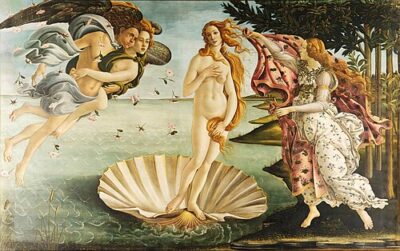
The Birth of Venus is a painting by Sandro Botticelli, Uffizi. It came out in 1485. It is based on Venus Pudica. It is part of mythological paintings by Botticelli.
- Came out
- 1485
- Created by
- Sandro Botticelli
- Genre
- mythological painting
All 9 facts, and where they come from
Facts
9 facts · 0 confirmed by two sources · 3 cited · 6 from one source
Where this comes from
Papalocal keeps its own record. It started from these sources; what each one said is kept here as it was copied, so a change on their side never changes this page by itself. Tap one to read its version.
What Wikidata says · copied November 17, 2026 · revision 2556305778
- Described as
- painting by Sandro Botticelli, Uffizi
- Other names
- Birth of Venus, Botticelli, Sandro, 1444 or 1445-1510. Birth of Venus, The Birth of Venus Sandro Botticelli, The Birth of Venus (Sandro Botticelli)
- What it is
- painting · 1 reference
- Created by
- Sandro Botticelli · 2 references
- Genre
- mythological painting; nude
- Based on
- Venus Pudica; birth of Aphrodite
- Part of the series
- mythological paintings by Botticelli
- Came out
- 1485 · 1 reference
- Country
- Italy
- Wikipedias with a page
- 57
Wikidata item Q151047 (wikidata.org/wiki/Q151047), public domain (CC0). Copied 2026-11-17.
What Wikipedia says · copied November 17, 2026 · revision 1381442393
The Birth of Venus (Italian: Nascita di Venere [ˈnaʃʃita di ˈvɛːnere]) is a painting by the Italian artist Sandro Botticelli, probably executed in the mid-1480s. It depicts the goddess Venus arriving at the shore after her birth, when she had emerged from the sea fully grown (called Venus Anadyomene and often depicted in art). The painting is in the Uffizi Gallery in Florence, Italy.
Although the two are not a pair, the painting is inevitably discussed with Botticelli's other very large mythological painting, the Primavera, also in the Uffizi. They are among the most famous paintings in the world, and icons of Italian Renaissance painting; of the two, the Birth is better known than the Primavera. As depictions of subjects from classical mythology on a very large scale they were virtually unprecedented in Western art since classical antiquity, as was the size and prominence of a nude female figure in the Birth. It used to be thought that they were both commissioned by the same member of the Medici family, but this is now uncertain.
They have been endlessly analysed by art historians, with the main themes being: the emulation of ancient painters and the context of wedding celebrations (generally agreed), the influence of Renaissance Neo-Platonism (somewhat controversial), and the identity of the commissioners (not agreed). Most art historians agree, however, that the Birth does not require complex analysis to decode its meaning, in the way that the Primavera probably does. While there are subtleties in the painting, its main meaning is a straightforward, if individual, treatment of a traditional scene from Greek mythology, and its appeal is sensory and very accessible, hence its enormous popularity.
From the Wikipedia article “The Birth of Venus” (en.wikipedia.org/wiki/The_Birth_of_Venus), by its contributors, under CC BY-SA 4.0 (creativecommons.org/licenses/by-sa/4.0/). Copied 2026-11-17; not changed.
Confirmed Two sources agree. Cited One source, and it names where it got it. One source One source, without a reference of its own. Sources disagree The sources disagree. We show the best-supported value and keep theirs below.
Picture: Sandro Botticelli, via Wikimedia Commons · Public domain