The Communist Manifesto
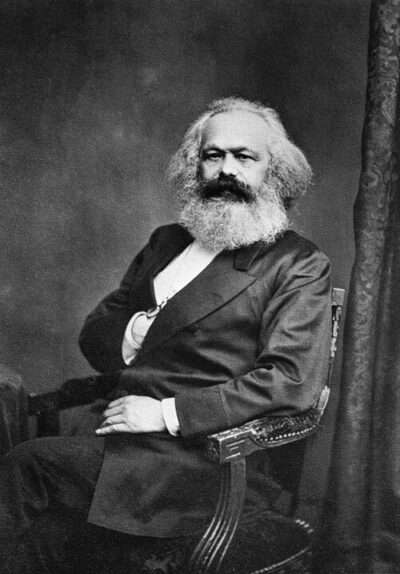
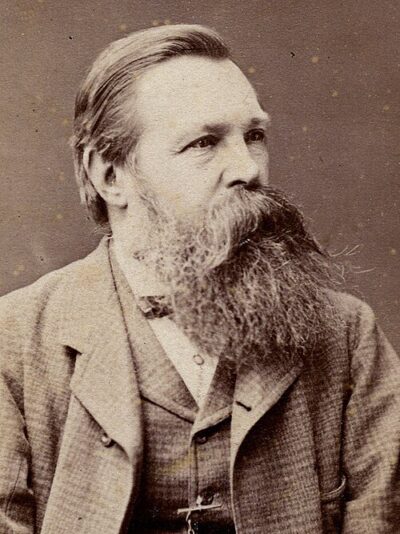
The Communist Manifesto is a 1848 publication written by Karl Marx and Friedrich Engels.
- Published
- February 21, 1848
- Written by
- Karl Marx
- Genre
- political manifesto
- Country of origin
- German Confederation
All 9 facts, and where they come from
Facts
9 facts · 0 confirmed by two sources · 0 cited · 9 from one source
Where this comes from
Papalocal keeps its own record. It started from these sources; what each one said is kept here as it was copied, so a change on their side never changes this page by itself. Tap one to read its version.
What Wikidata says · copied November 16, 2026 · revision 2546296127
- Described as
- 1848 publication written by Karl Marx and Friedrich Engels
- Other names
- Communist Manifesto
- What it is
- literary work; manifesto · 1 reference
- Written by
- Karl Marx; Friedrich Engels
- Genre
- political manifesto · 1 reference
- Published
- February 21, 1848
- Language
- German
- Country of origin
- German Confederation; United Kingdom · 1 reference
- Wikipedias with a page
- 143
Wikidata item Q40591 (wikidata.org/wiki/Q40591), public domain (CC0). Copied 2026-11-16.
What Wikipedia says · copied November 16, 2026 · revision 1384221044
The Communist Manifesto, originally the Manifesto of the Communist Party, is a political pamphlet written by Karl Marx and Friedrich Engels. It was commissioned by the Communist League and published in London in 1848. The text represents the first and most systematic attempt by the two founders of scientific socialism to codify for wide consumption the historical materialist idea; namely, that "the history of all hitherto existing society is the history of class struggles", in which social classes are defined by the relationship of people to the means of production. Published amid the Revolutions of 1848 in Europe, the manifesto has become one of the world's most influential political documents. "A spectre is haunting Europe — the spectre of communism." and "Workers of the world, unite!" stand as two iconic lines that frame the text, marking its opening and its close, respectively, with the latter being reworked and popularized into a famous slogan of working-class solidarity.
In the Manifesto, Marx and Engels combine philosophical materialism with the Hegelian dialectical method in order to analyze the development of European society through its modes of production, including primitive communism, antiquity, feudalism, and capitalism, noting the emergence of a new, dominant class at each stage. The text outlines the relationship between the means of production, relations of production, forces of production, and mode of production, and posits that changes in society's economic "base" affect changes in its "superstructure". The authors assert that capitalism is marked by the exploitation of the proletariat (working class or wage labourers) by the ruling bourgeoisie, which is "constantly revolutionising the instruments [and] relations of production, and with them the whole relations of society". They argue that capital's need for a flexible labour force dissolves the old relations, and that its global expansion in search of new markets creates "a world after its own image".
The Manifesto concludes that capitalism does not offer humanity the possibility of self-realization, instead ensuring that human beings are perpetually stunted and alienated. It theorizes that capitalism will bring about its own destruction by polarizing and unifying the proletariat, and predicts that a revolution will lead to the emergence of communism, a classless society in which "the free development of each is the condition for the free development of all". Marx and Engels proposed ten measures that they said a society transitioning towards Communism should take, measures which in the 1872 preface of the Manifesto they said weren’t applicable to the current situation.
From the Wikipedia article “The Communist Manifesto” (en.wikipedia.org/wiki/The_Communist_Manifesto), by its contributors, under CC BY-SA 4.0 (creativecommons.org/licenses/by-sa/4.0/). Copied 2026-11-16; not changed.
Confirmed Two sources agree. Cited One source, and it names where it got it. One source One source, without a reference of its own. Sources disagree The sources disagree. We show the best-supported value and keep theirs below.
Picture: Wikimedia Commons: Communist-manifesto.png · See Commons file page