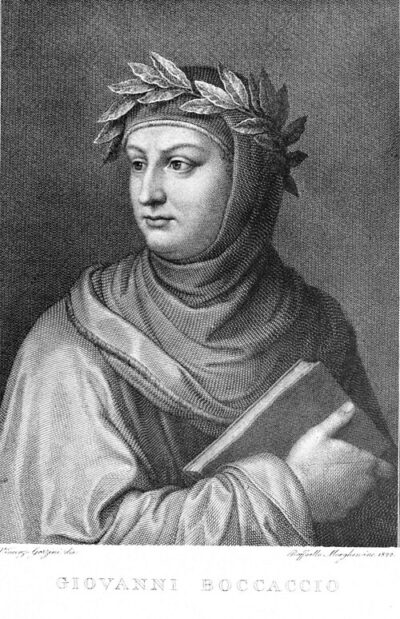
The Decameron
The Decameron is a 14th-century collection of stories by Giovanni Boccaccio.
- Came out
- 1350s
- Written by
- Giovanni Boccaccio
- Genre
- novella
- Country of origin
- Italy
All 7 facts, and where they come from
Facts
7 facts · 0 confirmed by two sources · 1 cited · 6 from one source
Where this comes from
Papalocal keeps its own record. It started from these sources; what each one said is kept here as it was copied, so a change on their side never changes this page by itself. Tap one to read its version.
What Wikidata says · copied November 17, 2026 · revision 2522310731
- Described as
- 14th-century collection of stories by Giovanni Boccaccio
- Other names
- Decameron, Decamerone, Il Decameron, Il Decamerone, Boccaccio, Giovanni, 1313-1375. Decamerone
- What it is
- literary work
- Written by
- Giovanni Boccaccio
- Genre
- novella · 2 references
- Language
- medieval Italian
- Country of origin
- Italy; Republic of Florence
- Came out
- 1350s
- Wikipedias with a page
- 76
Wikidata item Q16438 (wikidata.org/wiki/Q16438), public domain (CC0). Copied 2026-11-17.
What Wikipedia says · copied November 17, 2026 · revision 1384319072
The Decameron ( dih-KAM-ər-ən; Italian: Decameron [deˈkaːmeron, dekameˈrɔn, -ˈron] or Decamerone [dekameˈroːne]), subtitled Prince Galehaut (Old Italian: Prencipe Galeotto [ˈprentʃipe ɡaleˈɔtto, ˈprɛn-]), is a collection of short stories by the 14th-century Italian author Giovanni Boccaccio (1313–1375). It is sometimes nicknamed l'Umana commedia ("The Human Comedy"), as it was Boccaccio that dubbed Dante Alighieri's Comedy "Divine". The book is structured as a frame story containing 100 tales told by a group of seven young women and three young men; they shelter in a secluded villa just outside Florence in order to escape the Black Death, which was afflicting the city. The epidemic is likely what Boccaccio used for the basis of the book which was thought to be written between 1348 and 1353. The various tales of love in The Decameron range from the erotic to the tragic. Tales of wit, practical jokes, and life lessons also contribute to the mosaic. In addition to its literary value and widespread influence (for example on Chaucer's The Canterbury Tales), it provides a document of life at the time. Written in the vernacular of the Florentine language, it is considered a masterpiece of early Italian prose.
From the Wikipedia article “The Decameron” (en.wikipedia.org/wiki/The_Decameron), by its contributors, under CC BY-SA 4.0 (creativecommons.org/licenses/by-sa/4.0/). Copied 2026-11-17; not changed.
Confirmed Two sources agree. Cited One source, and it names where it got it. One source One source, without a reference of its own. Sources disagree The sources disagree. We show the best-supported value and keep theirs below.
Picture: Wikimedia Commons: Andrea del Castagno Giovanni Boccaccio c 1450.jpg · See Commons file page