The Divān of Hafez
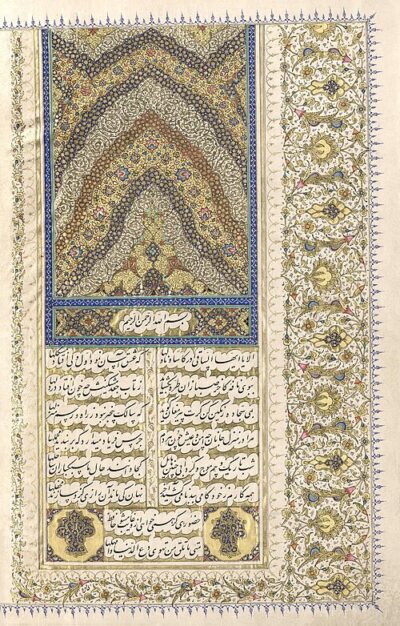
The Divān of Hafez is a collection of Classical Persian Poems written by Hafez. It came out in 1368. It is part of Persian literature.
- Published
- 1368
- Written by
- Hafez
- Genre
- poetry
All 6 facts, and where they come from
Facts
6 facts · 0 confirmed by two sources · 0 cited · 6 from one source
Where this comes from
Papalocal keeps its own record. It started from these sources; what each one said is kept here as it was copied, so a change on their side never changes this page by itself. Tap one to read its version.
What Wikidata says · copied November 17, 2026 · revision 2564937811
- Described as
- collection of Classical Persian Poems written by Hafez
- Other names
- Divan of Hafez, The Dīvān-i-Hāfiz
- What it is
- literary work
- Written by
- Hafez
- Genre
- poetry
- Published
- 1368
- Language
- Persian
- Part of the series
- Persian literature · 1 reference
- Wikipedias with a page
- 16
Wikidata item Q5939273 (wikidata.org/wiki/Q5939273), public domain (CC0). Copied 2026-11-17.
What Wikipedia says · copied November 17, 2026 · revision 1384474134
The Divân of Hafez (Persian: دیوان حافظ) is a collection of poems written by the Iranian poet Hafez. Most of these poems are in Persian, but there are some macaronic language poems (in Persian and Arabic) and a completely Arabic ghazal. The most important part of this Divân is the ghazals. Poems in other forms such as qetʿe, qasida, mathnawi and rubaʿi are as well included in the Divân. There is no evidence that Hafez's lost poems might have constituted the majority of his poetic output, and in addition, Hafez was very famous during his lifetime. Therefore he cannot have been a prolific poet. The number of ghazals that are generally accepted is less than 500: 495 ghazals in Ghazvini and Ghani edition, 486 ghazals in Natel-Khanlari's second edition and 484 ghazals in the Sayeh edition.
From the Wikipedia article “The Divân of Hafez” (en.wikipedia.org/wiki/The_Divân_of_Hafez), by its contributors, under CC BY-SA 4.0 (creativecommons.org/licenses/by-sa/4.0/). Copied 2026-11-17; not changed.
Confirmed Two sources agree. Cited One source, and it names where it got it. One source One source, without a reference of its own. Sources disagree The sources disagree. We show the best-supported value and keep theirs below.
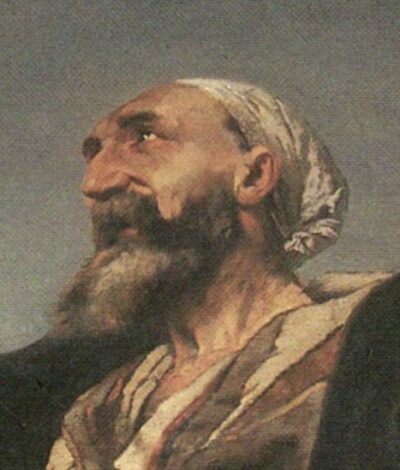
Picture: میرزا علینقی شیرازی, via Wikimedia Commons · Public domain