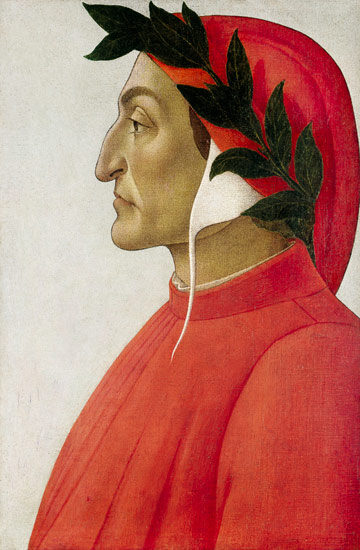
The Divine Comedy
The Divine Comedy is an Italian narrative poem by Dante Alighieri. It came out in 1320.
- Came out
- 1320
- Written by
- Dante Alighieri
- Genre
- epic poem
All 6 facts, and where they come from
Facts
6 facts · 0 confirmed by two sources · 1 cited · 5 from one source
Where this comes from
Papalocal keeps its own record. It started from these sources; what each one said is kept here as it was copied, so a change on their side never changes this page by itself. Tap one to read its version.
What Wikidata says · copied November 17, 2026 · revision 2565892541
- Described as
- Italian narrative poem by Dante Alighieri
- Other names
- Divina Commedia, Divina Comedia, Commedia, Comedìa
- What it is
- literary work
- Written by
- Dante Alighieri · 2 references
- Genre
- epic poem
- Language
- Tuscan; Italian · 1 reference
- Came out
- 1320 · 1 reference
- Wikipedias with a page
- 131
Wikidata item Q40185 (wikidata.org/wiki/Q40185), public domain (CC0). Copied 2026-11-17.
What Wikipedia says · copied November 17, 2026 · revision 1384221097
The Divine Comedy (Italian: Divina Commedia) is an Italian narrative poem by Dante Alighieri, begun c. 1308 and completed c. 1321, shortly before the author's death. It is widely considered the pre-eminent work in Italian literature and one of the greatest works of Western literature. The poem's imaginative vision of the afterlife is representative of the medieval worldview as it existed in the Latin Church by the 14th century. It helped establish the Tuscan language, in which it is written, as the standardized Italian language. It is divided into three parts: Inferno, Purgatorio, and Paradiso.
The poem explores the condition of the soul following death and portrays a vision of divine justice, in which individuals receive appropriate punishment or reward based on their actions. It describes Dante's travels through Hell, Purgatory, and Heaven. Allegorically, the poem represents the soul's journey towards God, beginning with the recognition and rejection of sin (Inferno), followed by the penitent Christian life (Purgatorio), which is then followed by the soul's ascent to God (Paradiso). Dante draws on medieval Catholic theology and philosophy, especially Thomistic philosophy derived from the Summa Theologica of Thomas Aquinas.
In the poem, the pilgrim Dante is accompanied by three guides: Virgil, who represents human reason and who guides him for all of Inferno and most of Purgatorio; Beatrice, who represents divine revelation, in addition to theology, grace, and faith, and who guides him from the end of Purgatorio onwards; and Saint Bernard of Clairvaux, who represents contemplative mysticism and devotion to Mary the Mother, guiding him in the final cantos of Paradiso.
The work was originally simply titled Comedìa (pronounced [komeˈdiːa], Tuscan for "Comedy") – so also in the first printed edition, published in 1472 – later adjusted to the modern Italian Commedia. The earliest known use of the adjective Divina appears in Giovanni Boccaccio's biographical work Trattatello in laude di Dante ("Treatise in Praise of Dante"), which was written between 1351 and 1355 – the adjective likely referring to the poem's profound subject matter and elevated style. The first edition to name the poem Divina Comedia in the title was that of the Venetian humanist Lodovico Dolce, published in 1555 by Gabriele Giolito de' Ferrari.
From the Wikipedia article “Divine Comedy” (en.wikipedia.org/wiki/Divine_Comedy), by its contributors, under CC BY-SA 4.0 (creativecommons.org/licenses/by-sa/4.0/). Copied 2026-11-17; not changed.
Confirmed Two sources agree. Cited One source, and it names where it got it. One source One source, without a reference of its own. Sources disagree The sources disagree. We show the best-supported value and keep theirs below.
Picture: Wikimedia Commons: Dante Domenico di Michelino.jpg · See Commons file page