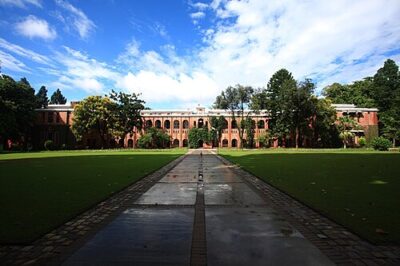
The Doon School
The Doon School is a boys' boarding school in Dehradun, India. It was founded in 1935 by Satish Ranjan Das.
- Located in
- Dehradun
- Country
- India
- Founded
- 1935
- What it is
- boarding school
All 8 facts, and where they come from
Facts
8 facts · 0 confirmed by two sources · 0 cited · 8 from one source
Where this comes from
Papalocal keeps its own record. It started from these sources; what each one said is kept here as it was copied, so a change on their side never changes this page by itself. Tap one to read its version.
What Wikidata says · copied November 17, 2026 · revision 2489517398
- Described as
- boys' boarding school in Dehradun, India
- Other names
- Doon School, Doon
- What it is
- boarding school; boys' school; private school
- Founded
- 1935
- Founded by
- Satish Ranjan Das
- Located in
- Dehradun
- Country
- India
- Official website
- https://www.doonschool.com/
- Wikipedias with a page
- 12
Wikidata item Q3087343 (wikidata.org/wiki/Q3087343), public domain (CC0). Copied 2026-11-17.
What Wikipedia says · copied November 17, 2026 · revision 1383015932
The Doon School (informally Doon School or Doon) is a selective all-boys private boarding school in Dehradun, Uttarakhand, India, which was established in 1935. It was envisioned by Satish Ranjan Das, a lawyer from Calcutta, as a school modelled on the British public school while remaining conscious of Indian ambitions and desires.
The school admitted its first pupils on 10 September 1935, and formally opened on 27 October 1935, with Lord Willingdon presiding over the ceremony. The school's first headmaster was Arthur E. Foot, an English educationalist who had spent nine years as a science master at Eton College, England.
The school houses roughly 580 pupils aged 12 to 18, and admission is based on a competitive entrance examination and an interview with the headmaster. Every year boys are admitted in only two-year groups: seventh grade in January and eighth grade in April. As of May 2019, boys from 26 Indian states as well as 35 non-resident Indians and foreign nationals were studying at Doon. The school is fully residential, and boys and most teachers live on campus. In tenth grade, students take the Cambridge IGCSE examinations, and for the final two years can choose between the Indian School Certificate or International Baccalaureate. A broad range of extra-curricular activities, numbering around 80, are offered to the boys, and early masters such as R.L. Holdsworth, J.A.K. Martyn, Jack Gibson and Gurdial Singh established a strong tradition of mountaineering at school. The school occupies the former site of the Forest Research Institute and is home to diverse flora and fauna. Doon remains a boys-only school despite continued pressure from political leaders to become coeducational. Old boys of the school are known as 'Doscos'.
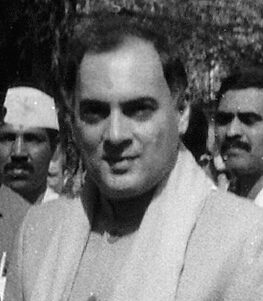
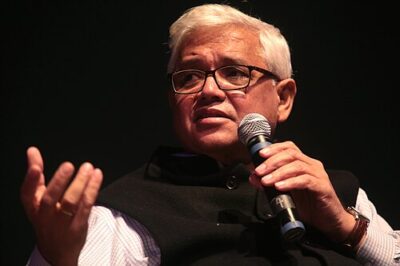
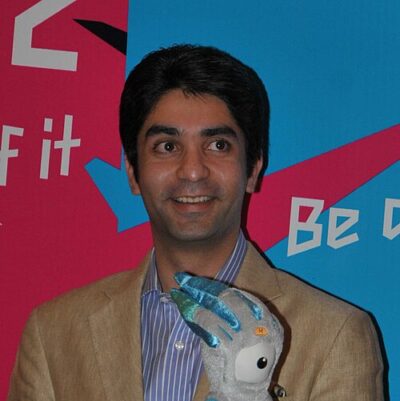
Doon has been consistently ranked as the best all-boys residential school in India. Although the school has often been cited as 'Eton of India' by media outlets such as the BBC, The New York Times, The Guardian, The Spectator, The Daily Telegraph, and Washington Post, it eschews the label. Doon often draws attention, and sometimes criticism, from the media for the perceived disproportionate influence of its alumni in spheres such as Indian politics, business, or culture. In the 1980s, Prime Minister Rajiv Gandhi's administration was criticised, and labelled "Doon Cabinet", following the appointment of his school acquaintances to major posts. The school has educated a wide range of notable alumni, including politicians, diplomats, artists, writers and businesspeople including late Indian Prime Minister Rajiv Gandhi and Olympic gold medalist Abhinav Bindra.
From the Wikipedia article “The Doon School” (en.wikipedia.org/wiki/The_Doon_School), by its contributors, under CC BY-SA 4.0 (creativecommons.org/licenses/by-sa/4.0/). Copied 2026-11-17; not changed.
Confirmed Two sources agree. Cited One source, and it names where it got it. One source One source, without a reference of its own. Sources disagree The sources disagree. We show the best-supported value and keep theirs below.
Picture: RickTyers, via Wikimedia Commons · CC BY-SA 3.0