The Economic Consequences of the Peace
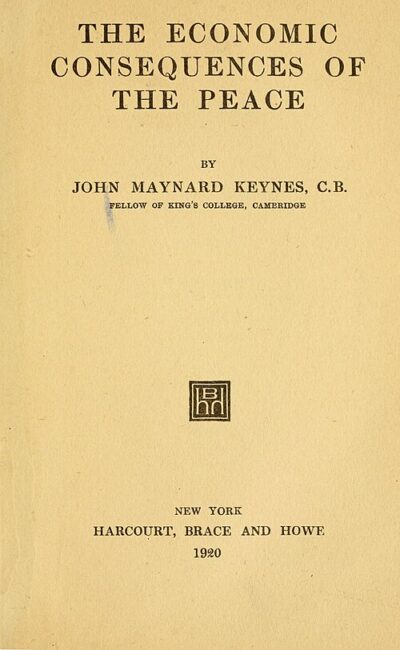
The Economic Consequences of the Peace is an essay by John Maynard Keynes. It came out in 1919.
- Published
- 1919
- Written by
- John Maynard Keynes
- Genre
- essay
- Country of origin
- United Kingdom
All 7 facts, and where they come from
Facts
7 facts · 0 confirmed by two sources · 0 cited · 7 from one source
Where this comes from
Papalocal keeps its own record. It started from these sources; what each one said is kept here as it was copied, so a change on their side never changes this page by itself. Tap one to read its version.
What Wikidata says · copied November 17, 2026 · revision 2468161454
- Described as
- essay by John Maynard Keynes
- What it is
- written work; non-fiction literary work
- Written by
- John Maynard Keynes
- Genre
- essay
- Published
- 1919; 1920
- Language
- English
- Country of origin
- United Kingdom
- Wikipedias with a page
- 12
Wikidata item Q2299605 (wikidata.org/wiki/Q2299605), public domain (CC0). Copied 2026-11-17.
What Wikipedia says · copied November 17, 2026 · revision 1384241715
The Economic Consequences of the Peace (1919) is a book written and published by the British economist John Maynard Keynes. After the First World War, Keynes attended the Paris Peace Conference of 1919 as a delegate of the British Treasury and deputy to the Chancellor of the Exchequer on the Supreme Economic Council. Becoming ill, he resigned from the position and returned early from the conference, believing that there was 'no hope' of an economically sustainable settlement. In this book, he presents his arguments for a much less onerous treaty, not just for the sake of German civilians but for the sake of the economic well-being of all of Europe and beyond, including the Allied Powers, which in his view the Treaty of Versailles and its associated treaties endangered.
The book was a commercial success, and a central influence in creating the popular view that the treaties were a "Carthaginian peace" designed to crush the defeated Central Powers, especially Germany. It helped to consolidate American public opinion against the treaties and against joining the League of Nations. The perception by much of the British public that Germany had been treated unfairly was, in turn, a crucial factor in later public support for the appeasement of Hitler.
However, in the preface to the French translation of the book, Keynes did not apportion blame in the same way. He wrote: "However, we do not hold France solely responsible for the disastrous treaty. All the countries that took part in the negotiations played a role. England, it may be said, was quick to satisfy her selfish interests, and it is she, above all others, who must be blamed for the form of the chapter on Reparations. She took Germany's colonies and navy and a larger share of the compensation than she was entitled to."
The success of the book established Keynes' reputation as a leading economist.
From the Wikipedia article “The Economic Consequences of the Peace” (en.wikipedia.org/wiki/The_Economic_Consequences_of_the_Peace), by its contributors, under CC BY-SA 4.0 (creativecommons.org/licenses/by-sa/4.0/). Copied 2026-11-17; not changed.
Confirmed Two sources agree. Cited One source, and it names where it got it. One source One source, without a reference of its own. Sources disagree The sources disagree. We show the best-supported value and keep theirs below.
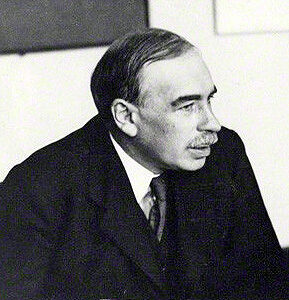
Picture: John Maynard Keynes, via Wikimedia Commons · Public domain