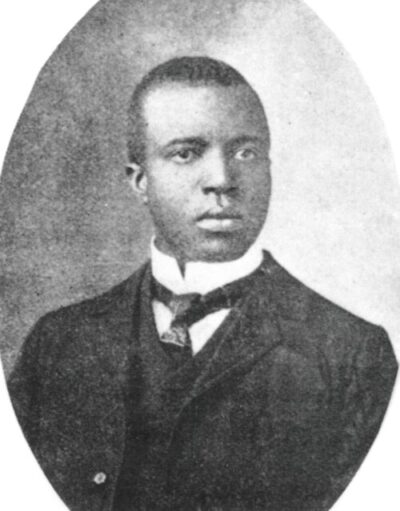
The Entertainer
The Entertainer is a piano rag by Scott Joplin. It came out in 1902.
- Released
- 1902
- Genre
- ragtime
- Country of origin
- United States
All 7 facts, and where they come from
Facts
7 facts · 0 confirmed by two sources · 3 cited · 4 from one source
Where this comes from
Papalocal keeps its own record. It started from these sources; what each one said is kept here as it was copied, so a change on their side never changes this page by itself. Tap one to read its version.
What Wikidata says · copied November 16, 2026 · revision 2569549465
- Described as
- piano rag by Scott Joplin
- Other names
- Entertainer (rag)
- What it is
- musical work/composition
- Music by
- Scott Joplin · 1 reference
- Genre
- ragtime · 1 reference; classic rag
- Released
- 1902 · 1 reference
- Language
- no linguistic content
- Country of origin
- United States
- Wikipedias with a page
- 25
Wikidata item Q1890794 (wikidata.org/wiki/Q1890794), public domain (CC0). Copied 2026-11-16.
What Wikipedia says · copied November 16, 2026 · revision 1384389506
"The Entertainer" is a 1902 classic piano rag written by Scott Joplin.
It was sold first as sheet music by John Stark & Son of Saint Louis, Missouri, and in the 1910s as piano rolls that would play on player pianos. The first recording was by blues and ragtime musicians "the Blue Boys" in 1928, played on mandolin and guitar.
As one of the classics of the ragtime genre, it returned to international prominence as part of the style revival in the 1970s, when it was used as the theme music for the 1973 Oscar-winning film The Sting. Composer and pianist Marvin Hamlisch's adaptation reached No. 3 on the Billboard pop chart and spent a week at No. 1 on the easy listening chart in 1974.
The Recording Industry Association of America ranked it at No. 10 on its "Songs of the Century" list.
From the Wikipedia article “The Entertainer” (en.wikipedia.org/wiki/The_Entertainer), by its contributors, under CC BY-SA 4.0 (creativecommons.org/licenses/by-sa/4.0/). Copied 2026-11-16; not changed.
Confirmed Two sources agree. Cited One source, and it names where it got it. One source One source, without a reference of its own. Sources disagree The sources disagree. We show the best-supported value and keep theirs below.
Picture: Wikimedia Commons: EntertainerJoplinCover.JPEG · See Commons file page