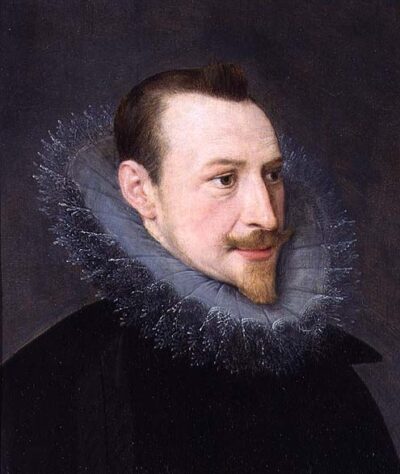
The Faerie Queene
The Faerie Queene is an English epic poem by Edmund Spenser. It came out in 1590.
- Released
- 1590
- Written by
- Edmund Spenser
- Genre
- fantasy
- Country of origin
- Kingdom of England
All 6 facts, and where they come from
Facts
6 facts · 0 confirmed by two sources · 2 cited · 4 from one source
Where this comes from
Papalocal keeps its own record. It started from these sources; what each one said is kept here as it was copied, so a change on their side never changes this page by itself. Tap one to read its version.
What Wikidata says · copied November 17, 2026 · revision 2510586454
- Described as
- English epic poem by Edmund Spenser
- What it is
- epic poem
- Written by
- Edmund Spenser · 1 reference
- Genre
- fantasy
- Released
- 1590 · 1 reference
- Language
- Early Modern English
- Country of origin
- Kingdom of England · 1 reference
- Wikipedias with a page
- 34
Wikidata item Q1813771 (wikidata.org/wiki/Q1813771), public domain (CC0). Copied 2026-11-17.
What Wikipedia says · copied November 17, 2026 · revision 1383797033
The Faerie Queene is an English epic poem by Edmund Spenser. Books I–III were first published in 1590, then republished in 1596 together with books IV–VI. The Faerie Queene is notable for its form: at 3,848 stanzas and nearly 35,000 lines, it is one of the longest poems in the English language; it is also the work in which Spenser invented the verse form known as the Spenserian stanza. On a literal level, the poem follows several knights as a means to examine different virtues. The poem is also an allegorical work. As such, it can be read on several levels, including as praise (or, later, criticism) of Queen Elizabeth I. In Spenser's "Letter of the Authors", he states that the entire epic poem is "cloudily enwrapped in Allegorical devices", and that the aim of publishing The Faerie Queene was to "fashion a gentleman or noble person in virtuous and gentle discipline".
Spenser presented the first three books of The Faerie Queene to Elizabeth I in 1589, probably sponsored by Walter Raleigh. The poem was a clear effort to gain court favour, and as a reward Elizabeth granted Spenser a pension for life amounting to £50 a year, though there is no further evidence that Elizabeth ever read any of the poem. This royal patronage elevated the poem to a level of success that made it Spenser's defining work.
From the Wikipedia article “The Faerie Queene” (en.wikipedia.org/wiki/The_Faerie_Queene), by its contributors, under CC BY-SA 4.0 (creativecommons.org/licenses/by-sa/4.0/). Copied 2026-11-17; not changed.
Confirmed Two sources agree. Cited One source, and it names where it got it. One source One source, without a reference of its own. Sources disagree The sources disagree. We show the best-supported value and keep theirs below.
Picture: Wikimedia Commons: The Faerie Queene frontispiece.jpg · See Commons file page