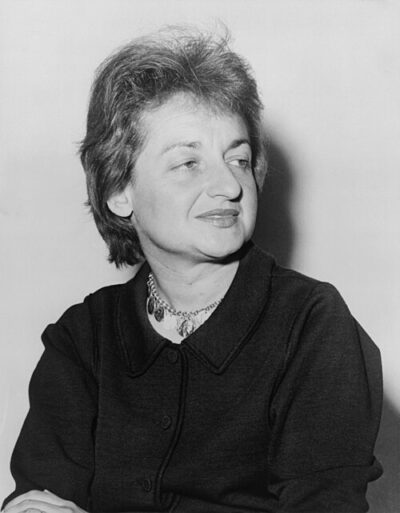
The Feminine Mystique
The Feminine Mystique is a non-fiction work by Betty Friedan. It came out in 1963. It won the Pulitzer Prize.
- Published
- 1963
- Written by
- Betty Friedan
- Genre
- non-fiction
- Country of origin
- United States
All 7 facts, and where they come from
Facts
7 facts · 0 confirmed by two sources · 0 cited · 7 from one source
Where this comes from
Papalocal keeps its own record. It started from these sources; what each one said is kept here as it was copied, so a change on their side never changes this page by itself. Tap one to read its version.
What Wikidata says · copied November 16, 2026 · revision 2496302323
- Described as
- non-fiction work by Betty Friedan
- What it is
- written work
- Written by
- Betty Friedan
- Genre
- non-fiction
- Published
- 1963
- Language
- English
- Country of origin
- United States · 1 reference
- Awards
- Pulitzer Prize (1964)
- Wikipedias with a page
- 26
Wikidata item Q2438791 (wikidata.org/wiki/Q2438791), public domain (CC0). Copied 2026-11-16.
What Wikipedia says · copied November 16, 2026 · revision 1384236878
The Feminine Mystique is a book by American author Betty Friedan, widely credited with sparking second-wave feminism in the United States. First published by W. W. Norton on February 19, 1963, The Feminine Mystique became a bestseller, initially selling over a million copies. Friedan used the book to challenge the widely shared belief that "fulfillment as a woman had only one definition for American women after 1949—the housewife-mother."
In 1957, Friedan was asked to conduct a survey of her former Smith College classmates for their 15th anniversary reunion; the results, in which she found that many of them were unhappy with their lives as housewives, prompted her to begin research for The Feminine Mystique, conducting interviews with other suburban housewives, as well as researching psychology, media, and advertising. The book faced criticism for focusing primarily on the experiences of white, middle-class women and overlooking the perspectives of women of color and working-class women. Friedan originally intended to create an article on the topic, not a book, but no magazine would publish the work.
Friedan coined the phrase "feminine mystique" to describe the assumptions that women would be fulfilled from their housework, marriage, sexual lives, and children. The prevailing belief was that women who were truly feminine should not want to work, get an education, or have political opinions. Friedan wanted to prove that women were unsatisfied and could not voice their feelings.
From the Wikipedia article “The Feminine Mystique” (en.wikipedia.org/wiki/The_Feminine_Mystique), by its contributors, under CC BY-SA 4.0 (creativecommons.org/licenses/by-sa/4.0/). Copied 2026-11-16; not changed.
Confirmed Two sources agree. Cited One source, and it names where it got it. One source One source, without a reference of its own. Sources disagree The sources disagree. We show the best-supported value and keep theirs below.
Picture: Wikimedia Commons: Betty Friedan 1960.jpg · See Commons file page