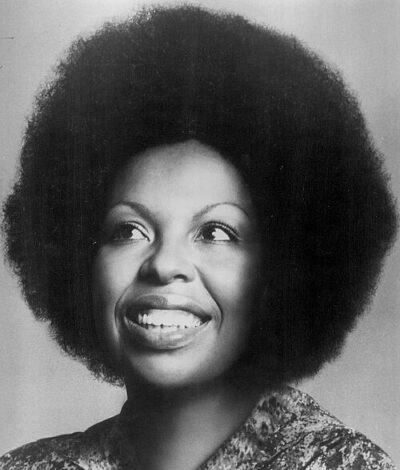
The First Time Ever I Saw Your Face
The First Time Ever I Saw Your Face is an original song written and composed by Ewan MacColl. It came out in 1957. It is performed by Bonnie Dobson and Roberta Flack.
- Released
- 1957
- Performed by
- Bonnie Dobson
- Genre
- pop music
All 7 facts, and where they come from
Facts
7 facts · 0 confirmed by two sources · 1 cited · 6 from one source
Where this comes from
Papalocal keeps its own record. It started from these sources; what each one said is kept here as it was copied, so a change on their side never changes this page by itself. Tap one to read its version.
What Wikidata says · copied November 16, 2026 · revision 2569900945
- Described as
- original song written and composed by Ewan MacColl
- What it is
- musical work/composition
- Performed by
- Bonnie Dobson; Roberta Flack
- Music by
- Ewan MacColl · 1 reference
- Genre
- pop music
- Released
- 1957
- Language
- English
- Wikipedias with a page
- 12
Wikidata item Q3036415 (wikidata.org/wiki/Q3036415), public domain (CC0). Copied 2026-11-16.
What Wikipedia says · copied November 16, 2026 · revision 1384394856
"The First Time Ever I Saw Your Face" is a 1957 folk song written by British political singer-songwriter Ewan MacColl for Peggy Seeger, who later became his third wife. At that time, MacColl was still married to his second wife, Jean Newlove. During the 1960s, it was recorded by various singers and became a major international hit for Roberta Flack in 1972, winning Grammy Awards for Record of the Year and Song of the Year. Billboard ranked it as the number-one Hot 100 single of the year for 1972. Celine Dion enjoyed a UK chart hit with the song in 2000, and Leona Lewis also charted with it in 2007.
From the Wikipedia article “The First Time Ever I Saw Your Face” (en.wikipedia.org/wiki/The_First_Time_Ever_I_Saw_Your_Face), by its contributors, under CC BY-SA 4.0 (creativecommons.org/licenses/by-sa/4.0/). Copied 2026-11-16; not changed.
Confirmed Two sources agree. Cited One source, and it names where it got it. One source One source, without a reference of its own. Sources disagree The sources disagree. We show the best-supported value and keep theirs below.