The Good Person of Szechwan
The Good Person of Szechwan is a play by Bertolt Brecht. It came out in 1943. It was written by Ruth Berlau and Margarete Steffin.
- Published
- 1943
- Came out
- 1941
- Written by
- Bertolt Brecht
- Genre
- drama fiction
All 10 facts, and where they come from
Facts
10 facts · 0 confirmed by two sources · 0 cited · 10 from one source
Where this comes from
Papalocal keeps its own record. It started from these sources; what each one said is kept here as it was copied, so a change on their side never changes this page by itself. Tap one to read its version.
What Wikidata says · copied November 17, 2026 · revision 2515872661
- Described as
- play by Bertolt Brecht
- Other names
- The Good Woman of Setzuan, The good person of Sichuan
- What it is
- literary work
- Written by
- Bertolt Brecht; Ruth Berlau · 1 reference; Margarete Steffin · 1 reference
- Genre
- drama fiction; epic theatre
- Published
- 1943
- Language
- German
- Came out
- 1941
- Named after
- Sichuan
- Wikipedias with a page
- 23
Wikidata item Q555959 (wikidata.org/wiki/Q555959), public domain (CC0). Copied 2026-11-17.
What Wikipedia says · copied November 17, 2026 · revision 1383600946
The Good Person of Szechwan (German: Der gute Mensch von Sezuan, first translated less literally as The Good Man of Setzuan) is a play written by the German dramatist Bertolt Brecht, in collaboration with Margarete Steffin and Ruth Berlau. The play was begun in 1938 but not completed until 1941, while the author was in exile in the United States. It was first performed in 1943 at the Zürich Schauspielhaus in Switzerland, with a musical score and songs by Swiss composer Huldreich Georg Früh. Today, Paul Dessau's composition of the songs from 1947 to 1948, also authorized by Brecht, is the better-known version. The play is an example of Brecht's "non-Aristotelian drama", a dramatic form intended to be staged with the methods of epic theater as a parable set in the Chinese "city of Szechwan".
From the Wikipedia article “The Good Person of Szechwan” (en.wikipedia.org/wiki/The_Good_Person_of_Szechwan), by its contributors, under CC BY-SA 4.0 (creativecommons.org/licenses/by-sa/4.0/). Copied 2026-11-17; not changed.
Confirmed Two sources agree. Cited One source, and it names where it got it. One source One source, without a reference of its own. Sources disagree The sources disagree. We show the best-supported value and keep theirs below.
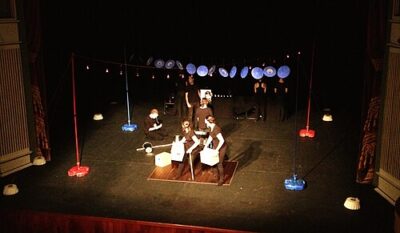
Picture: Alberto Rizzo, via Wikimedia Commons · CC BY-SA 4.0