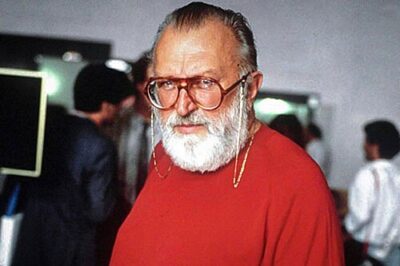
The Good, the Bad and the Ugly
The Good, the Bad and the Ugly is a 1966 film directed by Sergio Leone. It stars Clint Eastwood, Lee Van Cleef and Eli Wallach. It is part of Dollars Trilogy.
- Released
- December 23, 1966
- Directed by
- Sergio Leone
- Genre
- Spaghetti Western
- Country of origin
- Italy
All 29 facts, and where they come from
Facts
29 facts · 0 confirmed by two sources · 15 cited · 14 from one source
Where this comes from
Papalocal keeps its own record. It started from these sources; what each one said is kept here as it was copied, so a change on their side never changes this page by itself. Tap one to read its version.
What Wikidata says · copied November 17, 2026 · revision 2569933896
- Described as
- 1966 film directed by Sergio Leone
- Other names
- Good, the Bad and the Ugly, Il buono, il brutto, il cattivo, The Magnificent Rogues, Magnificent Rogues, The Good, the Ugly, the Bad
- What it is
- film
- Directed by
- Sergio Leone · 8 references
- Music by
- Ennio Morricone
- Screenplay by
- Age & Scarpelli; Luciano Vincenzoni · 1 reference; Sergio Donati; Agenore Incrocci · 1 reference
- Produced by
- Alberto Grimaldi
- Starring
- Clint Eastwood · 7 references; Lee Van Cleef · 7 references; Eli Wallach · 7 references; Mario Brega · 2 references; Aldo Giuffrè · 2 references; Luigi Pistilli · 5 references; Antonio Casale · 2 references; Rada Rassimov · 4 references; Maurizio Arena; Antonio Molino Rojo · 1 reference
- Genre
- Spaghetti Western; treasure hunt film; war film; drama film
- Released
- December 23, 1966 · 2 references; December 15, 1967 · 1 reference; December 29, 1967 · 1 reference
- Original language
- English; Italian
- Country of origin
- Italy · 4 references; Spain · 2 references
- Part of the series
- Dollars Trilogy
- Comes after
- For a Few Dollars More · 1 reference
- Wikipedias with a page
- 95
Wikidata item Q41483 (wikidata.org/wiki/Q41483), public domain (CC0). Copied 2026-11-17.
What Wikipedia says · copied November 17, 2026 · revision 1385651343
The Good, the Bad and the Ugly (Italian: Il buono, il brutto, il cattivo, lit. 'The good, the ugly, the bad') is a 1966 Italian epic spaghetti Western film directed by Sergio Leone and starring Clint Eastwood as "the Good", Lee Van Cleef as "the Bad", and Eli Wallach as "the Ugly". Its screenplay was written by Age & Scarpelli, Luciano Vincenzoni, and Leone, based on a story by Vincenzoni and Leone. Director of photography Tonino Delli Colli was responsible for the film's sweeping Techniscope cinematography, and Ennio Morricone composed the film's score.
The film is known for Leone's distinctive visual style, characterized by the juxtaposition of expansive wide shots and extreme close-ups, as well as a highly stylised treatment of violence, tension, and gunfights. Although an Italian production, it was filmed primarily in Spain, particularly in the Tabernas Desert in Almería, the Arlanza River valley near Hortigüela, and at the purpose-built Sad Hill Cemetery near Santo Domingo de Silos. Set against the backdrop of the American Civil War, the story follows three gunslingers who form shifting alliances and betrayals in their search for a buried cache of Confederate gold amid the chaos of the conflict. The film marked Leone's third collaboration with Eastwood and his second with Van Cleef.
Released in Italy on December 23, 1966, The Good, the Bad and the Ugly was subsequently distributed internationally and promoted in the United States as the third and final installment of the Dollars Trilogy, following A Fistful of Dollars (1964) and For a Few Dollars More (1965), although the three films are connected thematically rather than through a continuous narrative. Building on the growing international popularity of Leone and Eastwood, the film achieved major commercial success, grossing over $38 million worldwide against a production budget of approximately $1.2 million and becoming one of the most financially successful European Westerns of its time.
Initial critical reception in some markets was mixed, reflecting the broader skepticism then directed toward the spaghetti Western genre, which was often criticized for its stylisation, violence, and moral ambiguity in contrast to traditional Hollywood Westerns. Over time, however, the film underwent extensive critical re-evaluation and developed a strong cult following, aided by television screenings, home media releases, and later restoration efforts. It has since been widely recognized for its operatic scale, visual composition, editing, and the iconic score by Morricone. Frequently cited as one of the greatest and most influential Western films of all time, it has had a lasting impact on filmmakers and has been referenced and parodied across popular culture, including in films, television, comic books, and video games.
From the Wikipedia article “The Good, the Bad and the Ugly” (en.wikipedia.org/wiki/The_Good,_the_Bad_and_the_Ugly), by its contributors, under CC BY-SA 4.0 (creativecommons.org/licenses/by-sa/4.0/). Copied 2026-11-17; not changed.
Confirmed Two sources agree. Cited One source, and it names where it got it. One source One source, without a reference of its own. Sources disagree The sources disagree. We show the best-supported value and keep theirs below.