The Gospel of Wealth
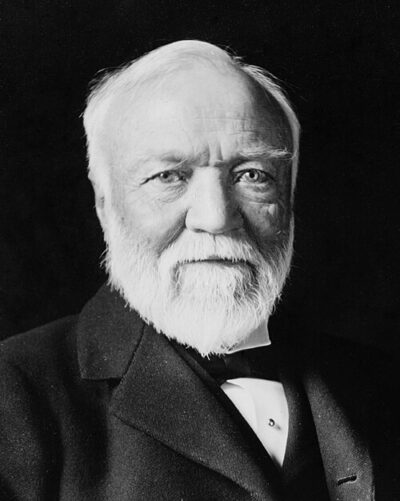
The Gospel of Wealth is an essay written by Andrew Carnegie. It came out in 1889.
- Released
- 1889
- Written by
- Andrew Carnegie
All 3 facts, and where they come from
Facts
3 facts · 0 confirmed by two sources · 0 cited · 3 from one source
Where this comes from
Papalocal keeps its own record. It started from these sources; what each one said is kept here as it was copied, so a change on their side never changes this page by itself. Tap one to read its version.
What Wikidata says · copied November 16, 2026 · revision 2557024524
- Described as
- essay written by Andrew Carnegie
- Other names
- Wealth, Gospel of Wealth
- What it is
- essay
- Written by
- Andrew Carnegie
- Released
- 1889
- Wikipedias with a page
- 6
Wikidata item Q7737386 (wikidata.org/wiki/Q7737386), public domain (CC0). Copied 2026-11-16.
What Wikipedia says · copied November 16, 2026 · revision 1380707801
"Wealth", more commonly known as "The Gospel of Wealth", is an essay written by Andrew Carnegie in June 1889 that describes the responsibility of philanthropy by the new upper class of self-made rich. The article was published in the North American Review, an opinion magazine for America's establishment. It was later published as "The Gospel of Wealth" in The Pall Mall Gazette.
Carnegie proposes that the best way to address the new phenomenon of wealth inequality is for the wealthy to use their surplus means responsibly and thoughtfully (similar to the concept of noblesse oblige). This approach is contrasted with traditional bequest (patrimony), in which wealth is handed down to heirs, and with other forms of bequest, e.g., where wealth is willed to the state for public purposes. Benjamin Soskis, a historian of philanthropy, refers to the article as the 'urtext' of modern philanthropy.
Carnegie argues that surplus wealth is put to best use (i.e., produces the greatest net benefit to society) when it is administered carefully by the wealthy. Carnegie also argues against the wasteful use of capital in the form of extravagance, irresponsible spending, or self-indulgence, instead promoting the administration of this capital over the course of one's lifetime toward reducing the stratification between the rich and the poor. As a result, the wealthy should administer their riches responsibly and not in a way that encourages "the slothful, the drunken, the unworthy".
At age 35, Carnegie decided to limit his personal wealth and donate the surplus to benevolent causes. He was determined to be remembered for his good deeds rather than his wealth. He became a "radical" philanthropist. Before publishing his ideas about wealth, he began donating to his favorite causes, starting by donating a public bath to his hometown of Dunfermline. As Carnegie tried to live his life in such a way that the poor could benefit from his wealth, he decided he needed to share his ideas with the public.
From the Wikipedia article “The Gospel of Wealth” (en.wikipedia.org/wiki/The_Gospel_of_Wealth), by its contributors, under CC BY-SA 4.0 (creativecommons.org/licenses/by-sa/4.0/). Copied 2026-11-16; not changed.
Confirmed Two sources agree. Cited One source, and it names where it got it. One source One source, without a reference of its own. Sources disagree The sources disagree. We show the best-supported value and keep theirs below.