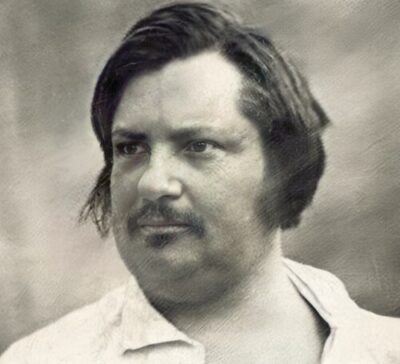
The Human Comedy
The Human Comedy is a 1822–1848 series of novels, essays and stories by Honoré de Balzac. It came out in 1830.
- Released
- 1830
- Written by
- Honoré de Balzac
- Genre
- literary realism
- Country of origin
- France
All 6 facts, and where they come from
Facts
6 facts · 0 confirmed by two sources · 0 cited · 6 from one source
Where this comes from
Papalocal keeps its own record. It started from these sources; what each one said is kept here as it was copied, so a change on their side never changes this page by itself. Tap one to read its version.
What Wikidata says · copied November 17, 2026 · revision 2556159023
- Described as
- 1822–1848 series of novels, essays and stories by Honoré de Balzac
- Other names
- La Comedie humaine, La Comédie humaine
- What it is
- literary cycle
- Written by
- Honoré de Balzac
- Genre
- literary realism
- Released
- 1830
- Language
- French
- Country of origin
- France
- Wikipedias with a page
- 39
Wikidata item Q50188 (wikidata.org/wiki/Q50188), public domain (CC0). Copied 2026-11-17.
What Wikipedia says · copied November 17, 2026 · revision 1385712733
La Comédie humaine (French: [la kɔmedi ymɛn]; English: The Human Comedy) is Honoré de Balzac's 1829–48 multi-volume collection of interlinked novels and stories depicting French society in the period of the Restoration (1815–30) and the July Monarchy (1830–48).
La Comédie humaine consists of 91 finished works (stories, novels, or analytical essays) and 46 unfinished works (some of which exist only as titles). It does not include Balzac's five theatrical plays or his collection of humorous tales Les Cent Contes drolatiques (1832–37).
A pioneer of the modern novel, Balzac describes the totality of reality as he understood it, and shows aspects of life hitherto ignored in literature, because they were ugly or vulgar. He shows in its various forms the rise of capitalism and the omnipotence of money, leading to the disappearance of nobility and the dissolution of social ties. La Comédie Humaine refers to the medieval poem Divine Comedy. Balzac's world is grounded in sociology, not theology, where love and friendship are of prime importance and which highlights the complexity of people and the deep immorality of a social mechanism where the weak are crushed while the crooked banker and the venal politician triumph. A keen observer, Balzac created human types that are strikingly true. Some of his characters are so vivid that they have become archetypes, such as Rastignac, the ambitious young provincial, Grandet, the miserly domestic tyrant, or Father Goriot, the icon of fatherhood. He gives an important place to financiers and notaries, but also to the character of Vautrin, the outlaw with multiple identities. His work includes many courtesans and grisettes, as well as admirable and angelic women. The importance of these women and their psychology earned him an enthusiastic female readership very early on.
Despite the opposition of the Catholic Church, this work quickly became a printing phenomenon and greatly influenced the development of the novel both in France and elsewhere. Translated into many languages, it is still published today and has often been adapted for film and television.
From the Wikipedia article “La Comédie humaine” (en.wikipedia.org/wiki/La_Comédie_humaine), by its contributors, under CC BY-SA 4.0 (creativecommons.org/licenses/by-sa/4.0/). Copied 2026-11-17; not changed.
Confirmed Two sources agree. Cited One source, and it names where it got it. One source One source, without a reference of its own. Sources disagree The sources disagree. We show the best-supported value and keep theirs below.
Picture: Wikimedia Commons: La Comédie humaine 06.jpg · See Commons file page