
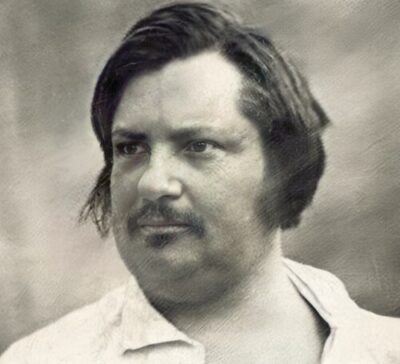
Honoré de Balzac
Honoré de Balzac was a French novelist and playwright. Born May 20, 1799, in Tours. Died August 18, 1850, in Paris. Positions held include president of the Société des gens de lettres (1839–1840). Known for Père Goriot, The Human Comedy and Illusions perdues. Educated at University of Paris and Lycée Charlemagne. Awards include Knight of the Legion of Honour.
Facts
36 facts · 2 confirmed by two sources · 14 cited · 19 from one source · 1 where the sources disagree
What’s different
- Buried in: we show Père Lachaise Cemetery (Sources disagree). Wikidata also lists Grave of Balzac and Ewelina Hańska
Where this comes from
Papalocal keeps its own record. It started from these sources; what each one said is kept here as it was copied, so a change on their side never changes this page by itself. Tap one to read its version.
What Wikidata says · copied November 16, 2026 · revision 2567630263
- Described as
- French novelist and playwright (1799–1850)
- Other names
- Ba'erzhake, Un Jeune ceelibataire, Pa-erh-cha-ko, Honoreé De Balzac, Jeune ceélibataire, Honoreé de Balzac, Honorato Balzac, Honoriusz Balzac, Instituteur Matricante, Honore de Balsac, Saint Aubin, Onorato di Balzac
- Born
- May 20, 1799 · 20 references
- Died
- August 18, 1850 · 11 references
- Born in
- Tours · 6 references
- Died in
- Paris · 7 references
- Buried in
- Père Lachaise Cemetery · 1 reference; Grave of Balzac and Ewelina Hańska
- Cause of death
- gangrene
- Citizen of
- France · 1 reference
- Occupation
- novelist · 1 reference; literary critic; writer · 8 references; prose writer · 1 reference; journalist; art critic; essayist; dramaturge · 2 references
- Positions held
- president of the Société des gens de lettres (1839–1840) · 1 reference
- Education
- University of Paris (1816–); Lycée Charlemagne (1814–1816); Paris Law Faculty (1816–1819)
- Known for
- Père Goriot; The Human Comedy; Illusions perdues; Eugénie Grandet; Splendeurs et misères des courtisanes; La Peau de chagrin; Les Chouans
- Awards
- Knight of the Legion of Honour (1845) · 1 reference
- Field
- French literature · 1 reference; journalism · 1 reference; literary criticism · 1 reference
- Spouse
- Ewelina Hańska (1850–) · 2 references
- Children
- Marie-Caroline Du Fresnay
- Father
- Bernard-François Balzac · 1 reference
- Mother
- Anne-Charlotte-Laure Sallambier
- Siblings
- Laure Surville · 1 reference
- Religion
- Catholicism
- Wikipedias with a page
- 177
Wikidata item Q9711 (wikidata.org/wiki/Q9711), public domain (CC0). Copied November 16, 2026.
What Wikipedia says · copied November 16, 2026 · revision 1382051786
Honoré de Balzac ( BAL-zak, also US: BAWL-; French: [ɔnɔʁe d(ə) balzak]; born Honoré Balzac; 20 May 1799 – 18 August 1850) was a French novelist and playwright. The novel sequence La Comédie humaine, described as a panorama of post-Napoleonic French life, is generally viewed as his magnum opus.
Due to his keen observation of detail and unfiltered representation of society, Balzac is regarded as one of the founders of realism in European literature. He is renowned for his multi-faceted characters; even his lesser characters are complex, morally ambiguous and fully human. Inanimate objects are imbued with character as well; the city of Paris, a backdrop for much of his writing, takes on many human qualities. His writing influenced many famous writers, including the novelists Émile Zola, Charles Dickens, Marcel Proust, Gustave Flaubert, Henry James and Fyodor Dostoevsky, and filmmakers François Truffaut and Jacques Rivette. Many of Balzac's works have been made into films and his work has served as a framework for other writers. James called him "really the father of us all."
- Born, in its opening lines
- May 20, 1799
- Died, in its opening lines
- August 18, 1850
From the Wikipedia article “Honoré de Balzac” (en.wikipedia.org/wiki/Honoré_de_Balzac), by its contributors, under CC BY-SA 4.0 (creativecommons.org/licenses/by-sa/4.0/). Copied November 16, 2026; not changed.
Confirmed Two sources agree. Cited One source, and it names where it got it. One source One source, without a reference of its own. Sources disagree The sources disagree. We show the best-supported value and keep theirs below.
