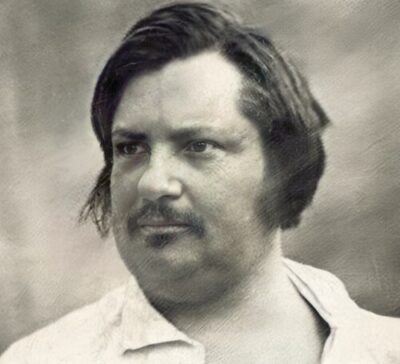
La Peau de chagrin
La Peau de chagrin is a novel by Honoré de Balzac (1831). It is part of The Human Comedy.
- Published
- 1831
- Came out
- 1830
- Written by
- Honoré de Balzac
- Genre
- fantastique
- Country of origin
- France
All 12 facts, and where they come from
Facts
12 facts · 0 confirmed by two sources · 2 cited · 10 from one source
Where this comes from
Papalocal keeps its own record. It started from these sources; what each one said is kept here as it was copied, so a change on their side never changes this page by itself. Tap one to read its version.
What Wikidata says · copied November 17, 2026 · revision 2489265003
- Described as
- novel by Honoré de Balzac (1831)
- Other names
- The Skin of Sorrow, The Wild Ass's Skin
- What it is
- literary work
- Written by
- Honoré de Balzac
- Publisher
- Charles Gosselin; Urbain Canel
- Genre
- fantastique · 1 reference
- Published
- 1831 · 1 reference
- Language
- French
- Country of origin
- France
- Part of the series
- The Human Comedy
- Comes after
- The Lily of the Valley
- Followed by
- Jésus-Christ en Flandre
- Came out
- 1830
- Wikipedias with a page
- 32
Wikidata item Q1142149 (wikidata.org/wiki/Q1142149), public domain (CC0). Copied 2026-11-17.
What Wikipedia says · copied November 17, 2026 · revision 1384238529
La Peau de chagrin (French pronunciation: [la po də ʃaɡʁɛ̃], The Skin of Shagreen), known in English as The Magic Skin and The Wild Ass's Skin, is an 1831 novel by French novelist and playwright Honoré de Balzac (1799–1850). Set in early 19th-century Paris, it tells the story of a young man who finds a magic piece of shagreen (untanned skin from a wild ass) that fulfills his every desire. For each wish granted, however, the skin shrinks and consumes a portion of his physical energy. La Peau de chagrin belongs to the Études philosophiques group of Balzac's sequence of novels, La Comédie humaine.
Before the book was completed, Balzac created excitement about it by publishing a series of articles and story fragments in several Parisian journals. Although he was five months late in delivering the manuscript, he succeeded in generating sufficient interest that the novel sold out instantly upon its publication. A second edition, which included a series of twelve other "philosophical tales", was released one month later.
Although the novel uses fantastic elements, its main focus is a realistic portrayal of the excesses of bourgeois materialism. Balzac's renowned attention to detail is used to describe a gambling house, an antique shop, a royal banquet, and other locales. He also includes details from his own life as a struggling writer, placing the main character in a home similar to the one he occupied at the start of his literary career. The central theme of La Peau de chagrin is the conflict between desire and longevity. The magic skin represents the owner's life-force, which is depleted through every expression of will, especially when it is employed for the acquisition of power. Ignoring a caution from the shopkeeper who offers him the skin, the protagonist greedily surrounds himself with wealth, only to find himself miserable and decrepit at the story's end.
La Peau de chagrin firmly established Balzac as a writer of significance in France. His social circle widened significantly, and he was sought eagerly by publishers for future projects. The book served as the catalyst for a series of letters he exchanged with a Polish baroness named Ewelina Hańska, who later became his wife. It also inspired Giselher Klebe's opera Die tödlichen Wünsche.
From the Wikipedia article “La Peau de chagrin” (en.wikipedia.org/wiki/La_Peau_de_chagrin), by its contributors, under CC BY-SA 4.0 (creativecommons.org/licenses/by-sa/4.0/). Copied 2026-11-17; not changed.
Confirmed Two sources agree. Cited One source, and it names where it got it. One source One source, without a reference of its own. Sources disagree The sources disagree. We show the best-supported value and keep theirs below.
Picture: Wikimedia Commons: BalzacMagicSkin01.jpg · See Commons file page