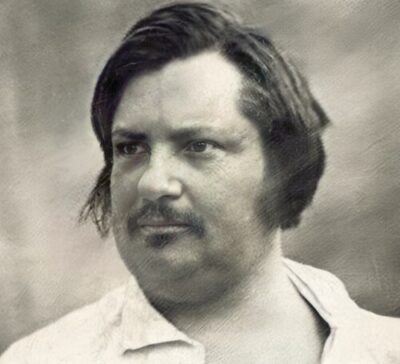
Père Goriot
Père Goriot is a 1835 novel by Honoré de Balzac. It is part of The Human Comedy.
- Published
- March 1835
- Came out
- 1835
- Written by
- Honoré de Balzac
- Genre
- historical fiction
- Country of origin
- France
All 10 facts, and where they come from
Facts
10 facts · 0 confirmed by two sources · 2 cited · 8 from one source
Where this comes from
Papalocal keeps its own record. It started from these sources; what each one said is kept here as it was copied, so a change on their side never changes this page by itself. Tap one to read its version.
What Wikidata says · copied November 17, 2026 · revision 2559560564
- Described as
- 1835 novel by Honoré de Balzac
- Other names
- Old Goriot, Le Père Goriot
- What it is
- literary work · 1 reference
- Written by
- Honoré de Balzac
- Genre
- historical fiction
- Published
- March 1835
- Language
- French
- Country of origin
- France
- Part of the series
- The Human Comedy
- Comes after
- La Femme de trente ans
- Followed by
- Colonel Chabert
- Came out
- 1835 · 1 reference
- Wikipedias with a page
- 61
Wikidata item Q240617 (wikidata.org/wiki/Q240617), public domain (CC0). Copied 2026-11-17.
What Wikipedia says · copied November 17, 2026 · revision 1384227272
Le Père Goriot (French pronunciation: [lə pɛʁ ɡɔʁjo], "Old Goriot" or "Father Goriot") is an 1835 novel by French novelist and playwright Honoré de Balzac (1799–1850), included in the Scènes de la vie privée section of his novel sequence La Comédie humaine. Set in Paris in 1819, it follows the intertwined lives of three characters: the elderly doting Goriot, a mysterious criminal-in-hiding named Vautrin and a naive law student named Eugène de Rastignac.
Originally published in serial form during the winter of 1834–1835, Le Père Goriot is widely considered Balzac's most important novel. It marks the first serious use by the author of characters who had appeared in other books, a technique that distinguishes Balzac's fiction. The novel is also noted as an example of his realist style, using minute details to create character and subtext.
The novel takes place during the Bourbon Restoration, which brought profound changes to French society; the struggle by individuals to secure a higher social status is a major theme in the book. The city of Paris also impresses itself on the characters – especially young Rastignac, who grew up in the provinces of southern France. Balzac analyzes, through Goriot and others, the nature of family and marriage, providing a pessimistic view of these institutions.
The novel was released to mixed reviews. Some critics praised the author for his complex characters and attention to detail; others condemned him for his many depictions of corruption and greed. A favorite of Balzac's, the book quickly won widespread popularity and has often been adapted for film and the stage. It gave rise to the French expression "Rastignac", a social climber willing to use any means to better his situation.
From the Wikipedia article “Père Goriot” (en.wikipedia.org/wiki/Père_Goriot), by its contributors, under CC BY-SA 4.0 (creativecommons.org/licenses/by-sa/4.0/). Copied 2026-11-17; not changed.
Confirmed Two sources agree. Cited One source, and it names where it got it. One source One source, without a reference of its own. Sources disagree The sources disagree. We show the best-supported value and keep theirs below.
Picture: Wikimedia Commons: Le Père Goriot, 1er Volume, 1835.png · See Commons file page