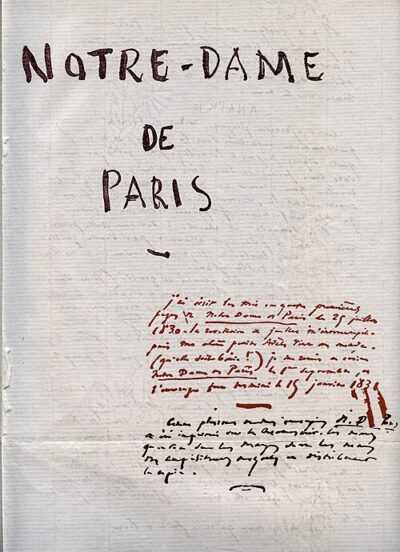
The Hunchback of Notre Dame
The Hunchback of Notre Dame is a novel by Victor Hugo. It came out in 1831.
- Published
- 1831
- Written by
- Victor Hugo
- Genre
- Gothic fiction
- Country of origin
- France
All 8 facts, and where they come from
Facts
8 facts · 0 confirmed by two sources · 0 cited · 8 from one source
Where this comes from
Papalocal keeps its own record. It started from these sources; what each one said is kept here as it was copied, so a change on their side never changes this page by itself. Tap one to read its version.
What Wikidata says · copied November 17, 2026 · revision 2564701689
- Described as
- novel by Victor Hugo
- Other names
- The Hunchback of Notre-Dame, Notre-Dame de Paris
- What it is
- literary work
- Written by
- Victor Hugo
- Genre
- Gothic fiction; Romanticism · 1 reference; historical fiction
- Published
- 1831
- Language
- French
- Country of origin
- France
- Wikipedias with a page
- 77
Wikidata item Q191380 (wikidata.org/wiki/Q191380), public domain (CC0). Copied 2026-11-17.
What Wikipedia says · copied November 17, 2026 · revision 1384455847
The Hunchback of Notre-Dame (French: Notre-Dame de Paris, lit. 'Our Lady of Paris', originally titled Notre-Dame de Paris. 1482) is a French Gothic novel by Victor Hugo, published in 1831. The title refers to the Notre-Dame Cathedral, which features prominently throughout the novel. It focuses on the unfortunate story of Quasimodo, the Romani street dancer Esmeralda, and Quasimodo's guardian the Archdeacon Claude Frollo in 15th-century Paris. All its elements—the Renaissance setting, impossible love affairs and marginalised characters—make the work a model of the literary themes of Romanticism.
The novel is considered a classic of French literature and has been adapted repeatedly for film, stage and television. Some prominent examples include a 1923 silent film with Lon Chaney, a 1939 sound film with Charles Laughton, a 1956 film with Anthony Quinn, and a 1996 animated film with Tom Hulce.
Written during a time of cultural upheaval, the novel champions historical preservation. Hugo solidified Notre-Dame de Paris as a national icon, arguing for the preservation of Gothic architecture as an element of France's cultural heritage.
From the Wikipedia article “The Hunchback of Notre-Dame” (en.wikipedia.org/wiki/The_Hunchback_of_Notre-Dame), by its contributors, under CC BY-SA 4.0 (creativecommons.org/licenses/by-sa/4.0/). Copied 2026-11-17; not changed.
Confirmed Two sources agree. Cited One source, and it names where it got it. One source One source, without a reference of its own. Sources disagree The sources disagree. We show the best-supported value and keep theirs below.
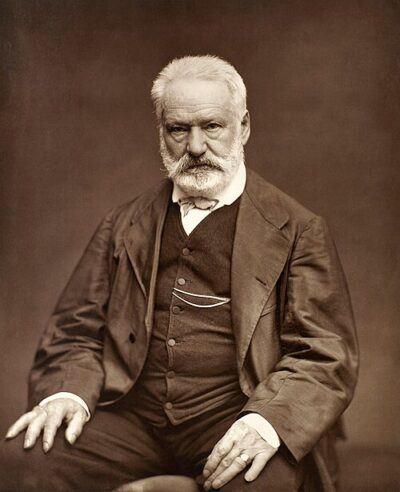
Picture: Victor Hugo, via Wikimedia Commons · Public domain