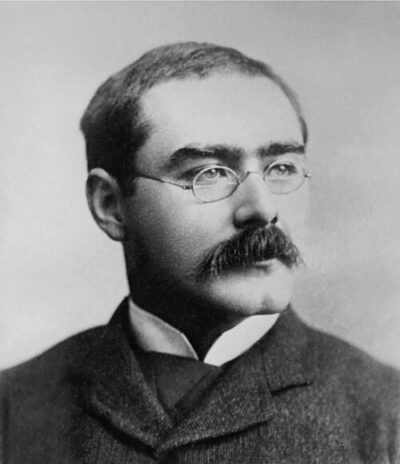
The Jungle Book
The Jungle Book is a 1894 short story collection by Rudyard Kipling.
- Published
- 1894
- Written by
- Rudyard Kipling
- Genre
- didactic literature
- Country of origin
- United Kingdom
All 7 facts, and where they come from
Facts
7 facts · 0 confirmed by two sources · 2 cited · 5 from one source
Where this comes from
Papalocal keeps its own record. It started from these sources; what each one said is kept here as it was copied, so a change on their side never changes this page by itself. Tap one to read its version.
What Wikidata says · copied November 17, 2026 · revision 2557647137
- Described as
- 1894 short story collection by Rudyard Kipling
- Other names
- Jungle Book, 1894 Jungle Book
- What it is
- literary work
- Written by
- Rudyard Kipling · 1 reference
- Genre
- didactic literature
- Published
- 1894 · 1 reference
- Language
- English
- Country of origin
- United Kingdom
- Followed by
- The Second Jungle Book
- Wikipedias with a page
- 69
Wikidata item Q189509 (wikidata.org/wiki/Q189509), public domain (CC0). Copied 2026-11-17.
What Wikipedia says · copied November 17, 2026 · revision 1385199444
The Jungle Book is an 1894 collection of stories by the English author Rudyard Kipling. Most of the characters are animals such as Shere Khan the tiger and Baloo the bear, though a principal character is the boy or "man-cub" Mowgli, who is raised in the jungle by wolves. Most stories are set in a dry forest in India; one place mentioned repeatedly is "Seeonee" (Seoni), in the central state of Madhya Pradesh.
A major theme in the book is abandonment followed by fostering, as in the life of Mowgli, echoing Kipling's own childhood. The theme is echoed in the triumph of protagonists including Rikki-Tikki-Tavi and The White Seal over their enemies, as well as Mowgli's. Another important theme is of law and freedom; the stories are not about animal behaviour, still less about the Darwinian struggle for survival, but about human archetypes in animal form. They teach respect for authority, obedience, and knowing one's place in society with "the law of the jungle", but the stories also illustrate the freedom to move between different worlds, such as when Mowgli moves between the jungle and the village. Critics have also noted the essential wildness and lawless energies in the stories, reflecting the irresponsible side of human nature.
The Jungle Book has remained popular, partly through its many adaptations for film and other media. Critics such as Swati Singh have noted that even critics wary of Kipling for his supposed imperialism have admired the power of his storytelling. The book has been influential in the scout movement, whose founder, Robert Baden-Powell, was a friend of Kipling. Percy Grainger composed his Jungle Book Cycle around quotations from the book.
From the Wikipedia article “The Jungle Book” (en.wikipedia.org/wiki/The_Jungle_Book), by its contributors, under CC BY-SA 4.0 (creativecommons.org/licenses/by-sa/4.0/). Copied 2026-11-17; not changed.
Confirmed Two sources agree. Cited One source, and it names where it got it. One source One source, without a reference of its own. Sources disagree The sources disagree. We show the best-supported value and keep theirs below.
Picture: Wikimedia Commons: JunglebookCover.jpg · See Commons file page