
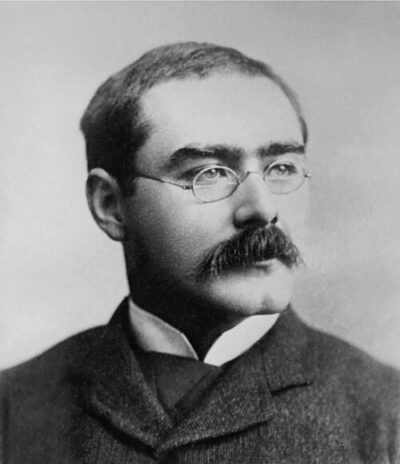
Rudyard Kipling
Rudyard Kipling was an English writer and poet. Born December 30, 1865, in Mumbai. Died January 18, 1936, in London. Positions held include Rector of the University of St Andrews (1922–1925). Known for The Jungle Book, Kim and If—. Educated at United Services College. Awards include Nobel Prize in Literature, Fellow of the Royal Society of Literature and Lektorix.
Facts
49 facts · 2 confirmed by two sources · 22 cited · 24 from one source · 1 where the sources disagree
What’s different
- Buried in: we show Golders Green Crematorium (Sources disagree). Wikidata also lists Westminster Abbey
Where this comes from
Papalocal keeps its own record. It started from these sources; what each one said is kept here as it was copied, so a change on their side never changes this page by itself. Tap one to read its version.
What Wikidata says · copied November 16, 2026 · revision 2570022492
- Described as
- English writer and poet (1865–1936)
- Other names
- Joseph Rudyard Kipling, Kipling, J. R. Kipling, Joseph R. Kipling, J. Rudyard Kipling, J. Kipling, R. Kipling
- Born
- December 30, 1865 · 26 references
- Died
- January 18, 1936 · 25 references
- Born in
- Mumbai · 2 references
- Died in
- London · 1 reference
- Buried in
- Westminster Abbey · 1 reference; Golders Green Crematorium · 2 references
- Cause of death
- ulcer
- Name at birth
- Joseph Rudyard Kipling
- Citizen of
- United Kingdom · 1 reference; United Kingdom of Great Britain and Ireland
- Occupation
- writer · 3 references; poet · 1 reference; novelist; war correspondent; children's writer; autobiographer; screenwriter; journalist · 1 reference
- Positions held
- Rector of the University of St Andrews (1922–1925)
- Worked for
- University of St Andrews
- Education
- United Services College
- Member of
- American Academy of Arts and Sciences; Royal Society of Literature; Freemasonry · 1 reference
- Known for
- The Jungle Book; Kim; If—; The Second Jungle Book · 1 reference; Just So Stories; Gunga Din
- Awards
- Nobel Prize in Literature (1907) · 2 references; Fellow of the Royal Society of Literature; Lektorix (2009); doctor honoris causa from the University of Paris (1921) · 1 reference; honorary doctorate from the University of Strasbourg (1921) · 1 reference; honorary degree · 1 reference
- Field
- literature · 1 reference; creative and professional writing · 1 reference; journalism · 1 reference; poetry · 1 reference; travel literature · 1 reference; children's and young adult literature · 1 reference
- Spouse
- Caroline Starr Balestier (1892–) · 3 references
- Children
- John Kipling · 2 references; Elsie Bambridge · 2 references; Josephine Kipling · 2 references
- Father
- John Lockwood Kipling · 1 reference
- Mother
- Alice MacDonald Kipling · 1 reference
- Siblings
- Alice Macdonald Fleming · 1 reference; John Kipling · 1 reference
- Wikipedias with a page
- 190
Wikidata item Q34743 (wikidata.org/wiki/Q34743), public domain (CC0). Copied November 16, 2026.
What Wikipedia says · copied November 16, 2026 · revision 1385561519
Joseph Rudyard Kipling ( RUD-yərd; 30 December 1865 – 18 January 1936) was an English journalist, novelist, poet and short-story writer. He was born in British India, which inspired much of his work.
Kipling's works of fiction include the Jungle Book duology (The Jungle Book, 1894; The Second Jungle Book, 1895), Kim (1901), the Just So Stories (1902) and many short stories, including "The Man Who Would Be King" (1888). His poems include "Mandalay" (1890), "Gunga Din" (1890), "The Gods of the Copybook Headings" (1919), "The White Man's Burden" (1899) and "If—" (1910). He is seen as an innovator in the art of the short story. His children's books are classics; one critic noted "a versatile and luminous narrative gift".
Kipling in the late 19th and early 20th centuries was among the United Kingdom's most popular writers. Henry James said "Kipling strikes me personally as the most complete man of genius, as distinct from fine intelligence, that I have ever known." In 1907 he was awarded the Nobel Prize in Literature, as the first English-language recipient and, at age 41, its youngest recipient to date. He was also sounded out for the British Poet Laureateship and several times for a knighthood, but declined both. Following his death in 1936, his ashes were interred at Poets' Corner in Westminster Abbey.
Kipling's subsequent reputation has changed with the political and social climate of the age. The contrasting views of him continued for much of the 20th century. The literary critic Douglas Kerr wrote that Kipling "is still an author who can inspire passionate disagreement and his place in literary and cultural history is far from settled. But as the age of the European empires recedes, he is recognised as an incomparable, if controversial, interpreter of how empire was experienced. That, and an increasing recognition of his extraordinary narrative gifts, make him a force to be reckoned with."
- Born, in its opening lines
- December 30, 1865
- Died, in its opening lines
- January 18, 1936
From the Wikipedia article “Rudyard Kipling” (en.wikipedia.org/wiki/Rudyard_Kipling), by its contributors, under CC BY-SA 4.0 (creativecommons.org/licenses/by-sa/4.0/). Copied November 16, 2026; not changed.
Confirmed Two sources agree. Cited One source, and it names where it got it. One source One source, without a reference of its own. Sources disagree The sources disagree. We show the best-supported value and keep theirs below.
