The Knights
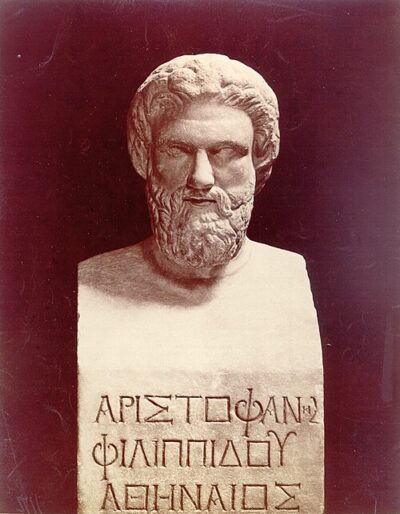
The Knights is a comedy by Aristophanes.
- Written by
- Aristophanes
- Genre
- Old Comedy
All 4 facts, and where they come from
Facts
4 facts · 0 confirmed by two sources · 2 cited · 2 from one source
Where this comes from
Papalocal keeps its own record. It started from these sources; what each one said is kept here as it was copied, so a change on their side never changes this page by itself. Tap one to read its version.
What Wikidata says · copied November 17, 2026 · revision 2556206584
- Described as
- comedy by Aristophanes
- Other names
- Knights, The Demagogues, Aristoph. Kn.
- What it is
- dramatic work
- Written by
- Aristophanes · 1 reference
- Genre
- Old Comedy
- Language
- Ancient Greek · 1 reference
- Wikipedias with a page
- 28
Wikidata item Q1215817 (wikidata.org/wiki/Q1215817), public domain (CC0). Copied 2026-11-17.
What Wikipedia says · copied November 17, 2026 · revision 1356842559
The Knights (Ancient Greek: Ἱππεῖς Hippeîs; Attic: Ἱππῆς) was the fourth play written by Aristophanes, who is considered the master of Old Comedy. The play is a satire on the social and political life of classical Athens during the Peloponnesian War, and in this respect it is typical of all the dramatist's early plays. It is unique, however, in the relatively small number of its characters, and this was due to its vitriolic preoccupation with one man, the pro-war populist Cleon. Cleon had prosecuted Aristophanes for slandering the polis with an earlier play, The Babylonians (426 BC), for which the young dramatist had promised revenge in The Acharnians (425 BC), and it was in The Knights (424 BC) that his revenge was exacted. The Knights won first prize at the Lenaia festival when it was produced in 424 BC.
From the Wikipedia article “The Knights” (en.wikipedia.org/wiki/The_Knights), by its contributors, under CC BY-SA 4.0 (creativecommons.org/licenses/by-sa/4.0/). Copied 2026-11-17; not changed.
Confirmed Two sources agree. Cited One source, and it names where it got it. One source One source, without a reference of its own. Sources disagree The sources disagree. We show the best-supported value and keep theirs below.