The Last Supper
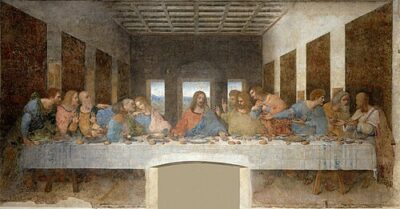
The Last Supper is a mural painting by Leonardo da Vinci. It came out in 1494. It is based on John 13.
- Came out
- 1490s (1494–1498)
- Created by
- Leonardo da Vinci
- Genre
- religious art
- Country of origin
- Republic of Florence
All 11 facts, and where they come from
Facts
11 facts · 0 confirmed by two sources · 1 cited · 10 from one source
Where this comes from
Papalocal keeps its own record. It started from these sources; what each one said is kept here as it was copied, so a change on their side never changes this page by itself. Tap one to read its version.
What Wikidata says · copied November 17, 2026 · revision 2567535547
- Described as
- mural painting by Leonardo da Vinci
- Other names
- Il Cenacolo, L'Ultima Cena, Cenacolo vinciano, L'ultima cena, Last Supper
- What it is
- wall painting; fresco painting; work of art
- Created by
- Leonardo da Vinci
- Genre
- religious art
- Country of origin
- Republic of Florence
- Based on
- John 13
- Came out
- 1490s (1494–1498) · 1 reference
- Located in
- Milan
- Country
- Italy · 1 reference
- Official website
- https://cenacolovinciano.org · 1 reference
- Wikipedias with a page
- 89
Wikidata item Q128910 (wikidata.org/wiki/Q128910), public domain (CC0). Copied 2026-11-17.
What Wikipedia says · copied November 17, 2026 · revision 1384290754
The Last Supper (Italian: Il Cenacolo [il tʃeˈnaːkolo] or L'Ultima Cena [ˈlultima ˈtʃeːna]) is a mural painting by the Italian High Renaissance artist Leonardo da Vinci, dated to c. 1495–1498, housed in the refectory of the Convent of Santa Maria delle Grazie in Milan, Italy. The painting represents the scene of the Last Supper of Jesus with the Twelve Apostles, as it is told in the Gospel of John – specifically the moment after Jesus announces that one of his apostles will betray him. Its handling of space, mastery of perspective, treatment of motion and complex display of human emotion has made it one of the Western world's most recognizable paintings and among Leonardo's most celebrated works. Some commentators consider it pivotal in inaugurating the transition into what is now termed the High Renaissance.
The work was commissioned as part of a plan of renovations to the church and its convent buildings by Leonardo's patron Ludovico Sforza, Duke of Milan. In order to permit his inconsistent painting schedule and frequent revisions, it is painted with materials that allowed for regular alterations: tempera on gesso, pitch, and mastic. Due to the methods used, a variety of environmental factors, and intentional damage, little of the original painting remains today despite numerous restoration attempts, the last being completed in 1999. The Last Supper is Leonardo's largest work, aside from the Sala delle Asse.
From the Wikipedia article “The Last Supper (Leonardo)” (en.wikipedia.org/wiki/The_Last_Supper_(Leonardo)), by its contributors, under CC BY-SA 4.0 (creativecommons.org/licenses/by-sa/4.0/). Copied 2026-11-17; not changed.
Confirmed Two sources agree. Cited One source, and it names where it got it. One source One source, without a reference of its own. Sources disagree The sources disagree. We show the best-supported value and keep theirs below.
Picture: Leonardo da Vinci, via Wikimedia Commons · Public domain