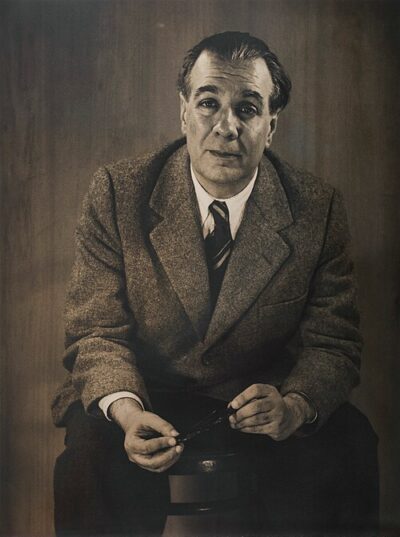
The Library of Babel
The Library of Babel is a 1941 short story by Jorge Luis Borges. It came out in 1944.
- Published
- 1944
- Came out
- 1941
- Written by
- Jorge Luis Borges
- Genre
- fantasy
- Country of origin
- Argentina
All 7 facts, and where they come from
Facts
7 facts · 0 confirmed by two sources · 0 cited · 7 from one source
Where this comes from
Papalocal keeps its own record. It started from these sources; what each one said is kept here as it was copied, so a change on their side never changes this page by itself. Tap one to read its version.
What Wikidata says · copied November 17, 2026 · revision 2546110914
- Described as
- 1941 short story by Jorge Luis Borges
- What it is
- literary work
- Written by
- Jorge Luis Borges
- Genre
- fantasy
- Published
- 1944
- Language
- Spanish
- Country of origin
- Argentina · 1 reference
- Came out
- 1941 · 1 reference
- Wikipedias with a page
- 25
Wikidata item Q473 (wikidata.org/wiki/Q473), public domain (CC0). Copied 2026-11-17.
What Wikipedia says · copied November 17, 2026 · revision 1378241386
"The Library of Babel" (Spanish: La biblioteca de Babel) is a short story by Argentine author and librarian Jorge Luis Borges (1899–1986), conceiving of a universe in the form of a vast library containing all possible 410-page books of a certain format and character set.
The story was originally published in Spanish in Borges' 1941 collection of stories El jardín de senderos que se bifurcan (The Garden of Forking Paths). That entire book was, in turn, included within his much-reprinted Ficciones (1944). Two English-language translations appeared approximately simultaneously in 1962, one by James E. Irby in a diverse collection of Borges's works titled Labyrinths and the other by Anthony Kerrigan as part of a collaborative translation of the entirety of Ficciones.
From the Wikipedia article “The Library of Babel” (en.wikipedia.org/wiki/The_Library_of_Babel), by its contributors, under CC BY-SA 4.0 (creativecommons.org/licenses/by-sa/4.0/). Copied 2026-11-17; not changed.
Confirmed Two sources agree. Cited One source, and it names where it got it. One source One source, without a reference of its own. Sources disagree The sources disagree. We show the best-supported value and keep theirs below.