The Life of Flavius Josephus
The Life of Flavius Josephus is an autobiographical work by Josephus. It came out in 99.
- Published
- 99
- Written by
- Josephus
- Genre
- autobiography
All 5 facts, and where they come from
Facts
5 facts · 0 confirmed by two sources · 0 cited · 5 from one source
Where this comes from
Papalocal keeps its own record. It started from these sources; what each one said is kept here as it was copied, so a change on their side never changes this page by itself. Tap one to read its version.
What Wikidata says · copied November 17, 2026 · revision 2408844443
- Described as
- autobiographical work by Josephus
- Other names
- J. Vit.
- What it is
- written work
- Written by
- Josephus
- Genre
- autobiography
- Published
- 99
- Language
- Ancient Greek
- Wikipedias with a page
- 12
Wikidata item Q2915316 (wikidata.org/wiki/Q2915316), public domain (CC0). Copied 2026-11-17.
What Wikipedia says · copied November 17, 2026 · revision 1384251131
The Life of (Flavius) Josephus (Greek: Ἰωσήπου βίος Iosepou bios), also called the "Life of Flavius Josephus", or simply Life or Vita, is an autobiographical text written by Josephus in approximately 94-99 CE as an appendix to his Antiquities of the Jews (cf. Antiquities of the Jews 20.260-268 and Life 430), where the author for the most part revisits the events of the First Jewish-Roman War. Life is also a response to allegations made against Josephus by Justus of Tiberias (cf. Life 336). Nothing survives of Justus of Tiberius's works except what is mentioned by Josephus in Life.
The Life of Josephus is the earliest complete autobiography that has survived intact from the ancient world. Most of the work (28-413) focuses on the activities of Josephus as a general in Galilee, where Jesus of Nazareth ministered, around the mid 60s AD during the first Jewish revolt against Rome. He discusses demographics of the inhabitants of Galilee, economics, cultural patterns, and government.
Josephus states he is descended from a priestly family and is related to Hasmonenan dynasty. At around 26 years old, Josephus traveled to Rome to negotiate the release of Jewish priests imprisoned there by Nero. With the assistance of Nero's wife, Poppaea, and a Jewish actor, he succeeded in securing their freedom. Upon his return to Jerusalem, at the outbreak of the First Jewish–Roman War, Josephus was appointed the military governor of Galilee. His arrival in Galilee, however, was fraught with internal division: the inhabitants of Sepphoris and Tiberias opted to maintain peace with the Romans; the people of Sepphoris enlisted the help of the Roman army to protect their city, while the people of Tiberias appealed to King Agrippa's forces to protect them from the insurgents. Josephus trained 65,000-100,000 troops in the region.
From the Wikipedia article “The Life of Flavius Josephus” (en.wikipedia.org/wiki/The_Life_of_Flavius_Josephus), by its contributors, under CC BY-SA 4.0 (creativecommons.org/licenses/by-sa/4.0/). Copied 2026-11-17; not changed.
Confirmed Two sources agree. Cited One source, and it names where it got it. One source One source, without a reference of its own. Sources disagree The sources disagree. We show the best-supported value and keep theirs below.
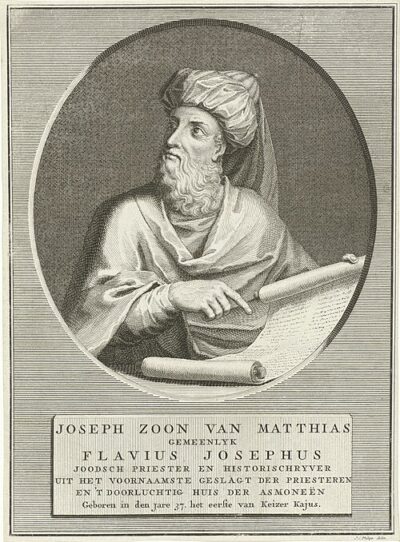
Picture: Unknown author, via Wikimedia Commons · Public domain