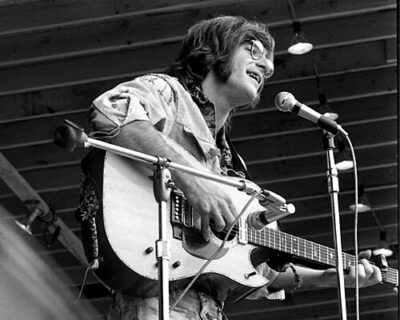
The Lovin' Spoonful
The Lovin' Spoonful is an American band founded in 1965. It won the Grammy Hall of Fame (2 times) and 1 more.
- Founded
- 1965
- Genre
- rock music
- Record label
- Kama Sutra
- Country of origin
- United States
All 12 facts, and where they come from
Facts
12 facts · 0 confirmed by two sources · 5 cited · 7 from one source
Where this comes from
Papalocal keeps its own record. It started from these sources; what each one said is kept here as it was copied, so a change on their side never changes this page by itself. Tap one to read its version.
What Wikidata says · copied November 17, 2026 · revision 2563759252
- Described as
- American band founded in 1965
- Other names
- Lovin' Spoonful
- What it is
- musical group
- Created by
- Milton Glaser · 1 reference
- Genre
- rock music · 3 references; folk rock · 2 references; pop music · 1 reference; pop rock · 1 reference
- Country of origin
- United States
- Record label
- Kama Sutra
- Founded
- 1965
- Awards
- Grammy Hall of Fame (2 times) (1998, 2001); Rock and Roll Hall of Fame (2000) · 1 reference
- Official website
- http://www.lovinspoonful.com
- Wikipedias with a page
- 26
Wikidata item Q1053608 (wikidata.org/wiki/Q1053608), public domain (CC0). Copied 2026-11-17.
What Wikipedia says · copied November 17, 2026 · revision 1381521746
The Lovin' Spoonful is a Canadian-American folk-rock band formed in Greenwich Village, New York City, in 1964. The band were among the most popular groups in the United States for a short period in the mid-1960s and their music and image influenced many of the contemporary rock acts of their era. Beginning in July 1965 with their debut single "Do You Believe in Magic", the band had seven consecutive singles reach the Top Ten of the US charts in the eighteen months that followed, including the number-two hits "Daydream" and "Did You Ever Have to Make Up Your Mind?" and the chart-topping "Summer in the City".
Led by their primary songwriter John Sebastian, the Spoonful took their earliest influences from jug band and blues music, reworking them into a popular music format. In 1965, the band helped pioneer the development of the musical genre of folk rock. By 1966, the group were "one of the most highly regarded American bands", and they were the year's third-best-selling singles act in the US, after the Beatles and the Rolling Stones. As psychedelia expanded in popularity in 1967, the Spoonful struggled to transition their approach and saw diminished sales before disbanding in 1968.
Before they founded the Spoonful, Sebastian (guitar, harmonica, autoharp, vocals) and Zal Yanovsky (guitar, vocals) were active in Greenwich Village's folk-music scene. Aiming to create an "electric jug band", they recruited the local rock musicians Steve Boone (bass guitar) and Joe Butler (drums, vocals). The four-piece lineup honed their sound at New York nightclubs before they began recording for Kama Sutra Records with the producer Erik Jacobsen. In May 1966, at the height of the band's success, Yanovsky and Boone were arrested for marijuana possession in San Francisco. The pair revealed their drug source to authorities to avoid Yanovsky being deported to his native Canada, an action which generated tensions within the group. Due to disagreements over their artistic direction, the band fired Yanovsky in May 1967, replacing him with Jerry Yester, and Yanovsky commenced a brief and commercially unsuccessful solo career. The original iteration of the Spoonful last publicly performed in June 1968, after which time Sebastian departed the group and pursued a briefly successful solo career. The band dissolved later that year.
In 2000, the Spoonful were inducted into the Rock and Roll Hall of Fame, an occasion that saw Sebastian, Yanovsky, Boone and Butler perform together for the last time. Yanovsky died of a heart attack two years later. Sebastian has remained active as a solo act, and Boone, Butler and Yester began touring under the name the Lovin' Spoonful in 1991.
From the Wikipedia article “The Lovin' Spoonful” (en.wikipedia.org/wiki/The_Lovin'_Spoonful), by its contributors, under CC BY-SA 4.0 (creativecommons.org/licenses/by-sa/4.0/). Copied 2026-11-17; not changed.
Confirmed Two sources agree. Cited One source, and it names where it got it. One source One source, without a reference of its own. Sources disagree The sources disagree. We show the best-supported value and keep theirs below.
Picture: Wikimedia Commons: Lovin Spoonful 1965.jpg · See Commons file page