The Magic Flute
The Magic Flute is a 1791 opera by Wolfgang Amadeus Mozart. It is based on libretto of The Magic Flute. It is part of list of operas by Wolfgang Amadeus Mozart.
- Released
- 18th century
- Came out
- 1791
- Genre
- singspiel
- Country of origin
- Archduchy of Austria
All 11 facts, and where they come from
Facts
11 facts · 0 confirmed by two sources · 2 cited · 9 from one source
Where this comes from
Papalocal keeps its own record. It started from these sources; what each one said is kept here as it was copied, so a change on their side never changes this page by itself. Tap one to read its version.
What Wikidata says · copied November 17, 2026 · revision 2568588895
- Described as
- 1791 opera by Wolfgang Amadeus Mozart
- Other names
- Die Zauberflöte, Magic Flute, K.620, K 620
- What it is
- dramatico-musical work
- Music by
- Wolfgang Amadeus Mozart · 1 reference
- Genre
- singspiel; opera · 1 reference
- Released
- 18th century
- Language
- German
- Country of origin
- Archduchy of Austria
- Based on
- libretto of The Magic Flute
- Part of the series
- list of operas by Wolfgang Amadeus Mozart
- Followed by
- The Magic Flute Part Two
- Came out
- 1791 · 1 reference
- Wikipedias with a page
- 68
Wikidata item Q5064 (wikidata.org/wiki/Q5064), public domain (CC0). Copied 2026-11-17.
What Wikipedia says · copied November 17, 2026 · revision 1385858136
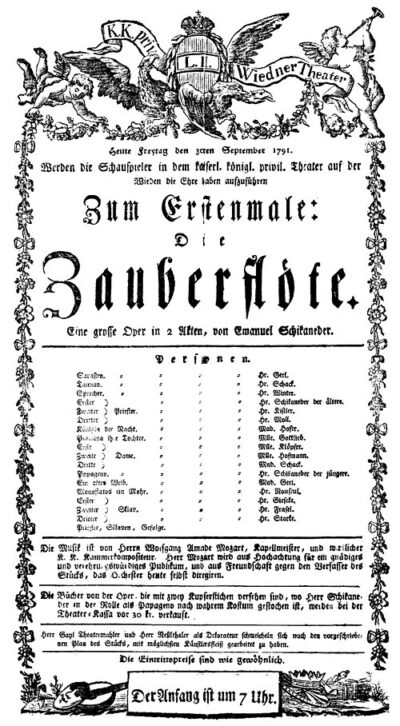
The Magic Flute (German: Die Zauberflöte, pronounced [diː ˈtsaʊbɐˌfløːtə] ), K. 620, is an opera in two acts by Wolfgang Amadeus Mozart to a German libretto by Emanuel Schikaneder. It is a Singspiel, a popular form that included both singing and spoken dialogue. The work premiered on 30 September 1791 at Schikaneder's theatre, the Freihaus-Theater auf der Wieden in Vienna, just two months before Mozart's death. It was Mozart's last opera. It was an outstanding success from its first performances, and remains a staple of the opera repertory.
In the opera, the Queen of the Night persuades Prince Tamino to rescue her daughter Pamina from captivity under the high priest Sarastro; instead, he learns the high ideals of Sarastro's community and seeks to join it. Separately, then together, Tamino and Pamina undergo severe trials of initiation, which end in triumph, with the Queen and her cohorts vanquished. The earthy Papageno, who accompanies Tamino on his quest, fails the trials completely but is rewarded anyway with the hand of his ideal female companion Papagena.
From the Wikipedia article “The Magic Flute” (en.wikipedia.org/wiki/The_Magic_Flute), by its contributors, under CC BY-SA 4.0 (creativecommons.org/licenses/by-sa/4.0/). Copied 2026-11-17; not changed.
Confirmed Two sources agree. Cited One source, and it names where it got it. One source One source, without a reference of its own. Sources disagree The sources disagree. We show the best-supported value and keep theirs below.
Picture: Wikimedia Commons · Public domain