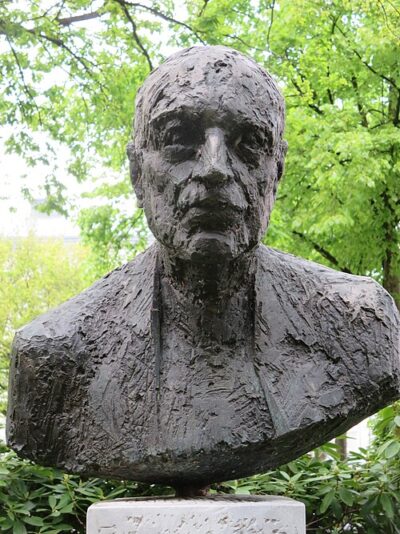
The New Testament and Mythology
The New Testament and Mythology is a non-fiction work by Rudolf Bultmann. It came out in 1941.
- Published
- 1941
- Written by
- Rudolf Bultmann
- Genre
- non-fiction literature
All 5 facts, and where they come from
Facts
5 facts · 0 confirmed by two sources · 0 cited · 5 from one source
Where this comes from
Papalocal keeps its own record. It started from these sources; what each one said is kept here as it was copied, so a change on their side never changes this page by itself. Tap one to read its version.
What Wikidata says · copied November 17, 2026 · revision 2401540085
- Described as
- non-fiction work by Rudolf Bultmann
- Other names
- Neues Testament und Mythologie, New Testament and Mythology, New Testament and Mythology: The Problem of Demythologizing the New Testament Message
- What it is
- literary work
- Written by
- Rudolf Bultmann
- Genre
- non-fiction literature
- Published
- 1941
- Language
- German
- Wikipedias with a page
- 4
Wikidata item Q4326898 (wikidata.org/wiki/Q4326898), public domain (CC0). Copied 2026-11-17.
What Wikipedia says · copied November 17, 2026 · revision 1199694005
New Testament and Mythology: The Problem of Demythologizing the New Testament Message, often shortened to New Testament and Mythology, is an influential and controversial theological essay by Rudolf Bultmann, published in 1941. The essay is generally considered one of the defining theological works of the 20th century. In it, Bultmann stresses the need to understand the New Testament, particularly the Gospels and their account of Christ, as being mythological in nature.
From the Wikipedia article “New Testament and Mythology” (en.wikipedia.org/wiki/New_Testament_and_Mythology), by its contributors, under CC BY-SA 4.0 (creativecommons.org/licenses/by-sa/4.0/). Copied 2026-11-17; not changed.
Confirmed Two sources agree. Cited One source, and it names where it got it. One source One source, without a reference of its own. Sources disagree The sources disagree. We show the best-supported value and keep theirs below.