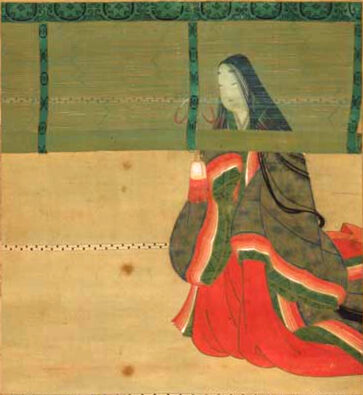
The Pillow Book
The Pillow Book is a 1002 book of observations and musings recorded by Sei Shōnagon.
- Came out
- 1002
- Written by
- Sei Shōnagon
- Genre
- zuihitsu
- Country of origin
- Japan
All 6 facts, and where they come from
Facts
6 facts · 0 confirmed by two sources · 0 cited · 6 from one source
Where this comes from
Papalocal keeps its own record. It started from these sources; what each one said is kept here as it was copied, so a change on their side never changes this page by itself. Tap one to read its version.
What Wikidata says · copied November 17, 2026 · revision 2536865809
- Described as
- 1002 book of observations and musings recorded by Sei Shōnagon
- Other names
- Makura no Sōshi, Pillow Book
- What it is
- literary work
- Written by
- Sei Shōnagon
- Genre
- zuihitsu
- Language
- Early Middle Japanese
- Country of origin
- Japan
- Came out
- 1002
- Wikipedias with a page
- 39
Wikidata item Q615137 (wikidata.org/wiki/Q615137), public domain (CC0). Copied 2026-11-17.
What Wikipedia says · copied November 17, 2026 · revision 1372128460
The Pillow Book (枕草子, Makura no Sōshi) is a book of observations and musings recorded by Sei Shōnagon during her time as court lady to the Empress Consort Fujiwara no Teishi during the 990s and early 1000s in the Heian period of Japan. The book was completed in the year 1002.
The work is a collection of essays, anecdotes, poems, and descriptive passages that have little connection to one another, except that they express ideas and whims of Shōnagon, spurred by moments in her daily life. Shōnagon meant her writing in The Pillow Book to be private, but part of it was accidentally revealed to the court during her life: "[S]he inadvertently left it [her writing] on a cushion she put out for a visiting guest, who eagerly carried it off despite her pleas." She wrote The Pillow Book for her own enjoyment; it seemed to be a way for her to express thoughts and feelings that she was not allowed to state publicly due to her lower status in the court. Although Shōnagon never intended her work for any eyes other than her own, over the centuries it has become a famous literary work. Six passages from the book were first translated into English in 1889 by T. A. Purcell and W. G. Aston. Other notable English translations have been the partial translation by Arthur Waley in 1928, the first complete translation by Ivan Morris in 1967, and Meredith McKinney's complete translation in 2006.
From the Wikipedia article “The Pillow Book” (en.wikipedia.org/wiki/The_Pillow_Book), by its contributors, under CC BY-SA 4.0 (creativecommons.org/licenses/by-sa/4.0/). Copied 2026-11-17; not changed.
Confirmed Two sources agree. Cited One source, and it names where it got it. One source One source, without a reference of its own. Sources disagree The sources disagree. We show the best-supported value and keep theirs below.
Picture: Wikimedia Commons: Sei Shonagon2.jpg · See Commons file page