The Sceptical Chymist
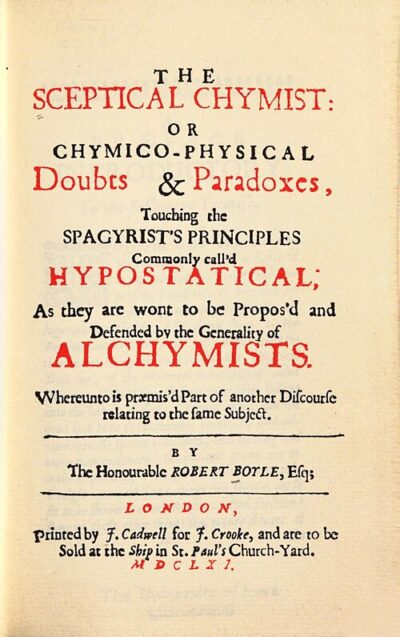
The Sceptical Chymist is a 1661 book by Robert Boyle.
- Published
- 1661
- Written by
- Robert Boyle
- Country of origin
- Kingdom of England
All 6 facts, and where they come from
Facts
6 facts · 0 confirmed by two sources · 0 cited · 6 from one source
Where this comes from
Papalocal keeps its own record. It started from these sources; what each one said is kept here as it was copied, so a change on their side never changes this page by itself. Tap one to read its version.
What Wikidata says · copied November 17, 2026 · revision 2516872372
- Described as
- 1661 book by Robert Boyle
- Other names
- Sceptical Chymist
- What it is
- literary work
- Written by
- Robert Boyle
- Publisher
- J. Cadwell
- Published
- 1661
- Language
- English
- Country of origin
- Kingdom of England · 1 reference
- Wikipedias with a page
- 19
Wikidata item Q60161 (wikidata.org/wiki/Q60161), public domain (CC0). Copied 2026-11-17.
What Wikipedia says · copied November 17, 2026 · revision 1384250636
The Sceptical Chymist: or Chymico-Physical Doubts & Paradoxes is the title of a book by Robert Boyle, published in London in 1661. In the form of a dialogue, the Sceptical Chymist presented Boyle's hypothesis that matter consisted of corpuscles and clusters of corpuscles in motion and that every phenomenon was the result of collisions of particles in motion. Boyle also objected to the definitions of elemental bodies propounded by Aristotle and by Paracelsus, instead defining elements as "perfectly unmingled bodies" (see below). For these reasons Robert Boyle has sometimes been called the founder of modern chemistry.
The main setting for the book is a private garden, where five characters are having a conversation about the constituents of mixed bodies. Four of the characters are named, while the fifth one is the unnamed narrator. Due to the popularity of the book, Aristotle’s doctrine of the four elements and Paracelsus’ theory of the three principles gradually passed into disuse.
From the Wikipedia article “The Sceptical Chymist” (en.wikipedia.org/wiki/The_Sceptical_Chymist), by its contributors, under CC BY-SA 4.0 (creativecommons.org/licenses/by-sa/4.0/). Copied 2026-11-17; not changed.
Confirmed Two sources agree. Cited One source, and it names where it got it. One source One source, without a reference of its own. Sources disagree The sources disagree. We show the best-supported value and keep theirs below.
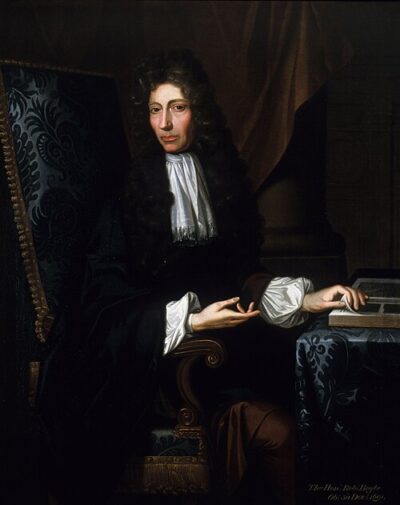
Picture: Robert Boyle, via Wikimedia Commons · Public domain