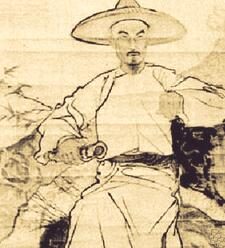
The Scholars
The Scholars is a literary work. It was written by Wu Jingzi.
- Written by
- Wu Jingzi
- Country of origin
- Qing dynasty
All 4 facts, and where they come from
Facts
4 facts · 0 confirmed by two sources · 0 cited · 4 from one source
Where this comes from
Papalocal keeps its own record. It started from these sources; what each one said is kept here as it was copied, so a change on their side never changes this page by itself. Tap one to read its version.
What Wikidata says · copied November 18, 2026 · revision 2555901528
- Described as
- literary work
- Other names
- Unofficial History of the Scholars, Rulin waishi
- What it is
- literary work
- Written by
- Wu Jingzi
- Language
- written vernacular Chinese
- Country of origin
- Qing dynasty · 1 reference
- Wikipedias with a page
- 17
Wikidata item Q1218689 (wikidata.org/wiki/Q1218689), public domain (CC0). Copied 2026-11-18.
What Wikipedia says · copied November 18, 2026 · revision 1386314048
The Scholars (Chinese: 儒林外史; pinyin: Rúlín Wàishǐ), also translated as The Unofficial History of the Scholars, is a Chinese novel written by Wu Jingzi and published in 1750 during the Qing dynasty. It is considered one of the great "Classic Chinese Novels", and is distinguished for its unusual narrative structure and acerbic wit.
Set in the Ming period, The Scholars describes and often satirizes academic scholars. The novel's loose and sprawling narration often follows a lead character for several chapters, and then seamlessly transitions to another character who is introduced at a social gathering (such as a party or an event) of the previous character, with previous lead characters then appearing as a recurring guest or a minor character in the following vignettes. It features a large ensemble of characters, and most of the interconnected plotlines that form the bulk of the novel are didactic stories, on the one hand holding up exemplary Confucian behavior, but on the other ridiculing over-ambitious scholars and the imperial examination system.
Promoting naturalistic attitudes over belief in the supernatural, the author rejects the popular belief in retribution: his bad characters suffer no punishment. The characters in these stories are intellectuals, perhaps based on the author's friends and contemporaries. Although the novel's tone is highly caustic, a major incident in the novel is one of the main characters, Du Shaoqing's, attempt to renovate his family's ancestral temple, suggesting the author shared with Du a belief in the importance of Confucianism in life in spite of his criticism.
The Scholars paints a complex tapestry of interconnected and intricate scholarly lives and was one of the first major novels to seriously utilize a vernacular style now called baihua. Classical phrases (wenyan) appear occasionally, but only in the speech of elite characters. Language reformers in the early 20th-century New Culture Movement used the novel to support their view that wenyan was a form of snobbery. The novel has been described as "represents one of the highest achievements of the ‘literati novel’".
From the Wikipedia article “The Scholars (novel)” (en.wikipedia.org/wiki/The_Scholars_(novel)), by its contributors, under CC BY-SA 4.0 (creativecommons.org/licenses/by-sa/4.0/). Copied 2026-11-18; not changed.
Confirmed Two sources agree. Cited One source, and it names where it got it. One source One source, without a reference of its own. Sources disagree The sources disagree. We show the best-supported value and keep theirs below.
Picture: Wikimedia Commons: DuJin-ChinesischeGelehrte.jpg · See Commons file page