The Seventh Seal
The Seventh Seal is a 1957 film by Ingmar Bergman. It stars Max von Sydow, Gunnar Björnstrand and Bengt Ekerot. It is based on Wood painting.
- Released
- February 16, 1957
- Directed by
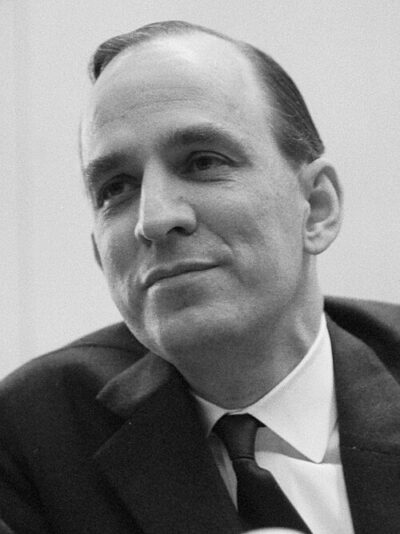
- Ingmar Bergman
- Genre
- fantasy film
- Country of origin
- Sweden
All 24 facts, and where they come from
Facts
24 facts · 0 confirmed by two sources · 9 cited · 15 from one source
Where this comes from
Papalocal keeps its own record. It started from these sources; what each one said is kept here as it was copied, so a change on their side never changes this page by itself. Tap one to read its version.
What Wikidata says · copied November 17, 2026 · revision 2567686657
- Described as
- 1957 film by Ingmar Bergman
- Other names
- Seventh Seal
- What it is
- film
- Directed by
- Ingmar Bergman · 3 references
- Music by
- Erik Nordgren · 3 references
- Screenplay by
- Ingmar Bergman · 3 references
- Produced by
- Allan Ekelund
- Starring
- Max von Sydow · 1 reference; Gunnar Björnstrand · 1 reference; Bengt Ekerot · 1 reference; Nils Poppe · 1 reference; Bibi Andersson; Gunnel Lindblom; Gunnar Olsson; Inga Landgré; Åke Fridell; Maud Hansson
- Genre
- fantasy film; drama film; historical film
- Released
- February 16, 1957 · 2 references; May 15, 1957 · 1 reference; December 11, 1957 · 1 reference
- Original language
- Swedish; Latin
- Country of origin
- Sweden
- Based on
- Wood painting · 1 reference
- Named after
- Book of Revelation
- Wikipedias with a page
- 65
Wikidata item Q217189 (wikidata.org/wiki/Q217189), public domain (CC0). Copied 2026-11-17.
What Wikipedia says · copied November 17, 2026 · revision 1385967860
The Seventh Seal (Swedish: Det sjunde inseglet) is a 1957 Swedish historical fantasy film written and directed by Ingmar Bergman. It stars Max von Sydow as Antonius Block, a medieval knight returning to Sweden during the Black Death after the Crusades, who challenges the personification of Death (Bengt Ekerot) to a game of chess in an attempt to delay his fate. The cast also features Gunnar Björnstrand, Nils Poppe, Bibi Andersson, Inga Gill, Maud Hansson, and Gunnel Lindblom.
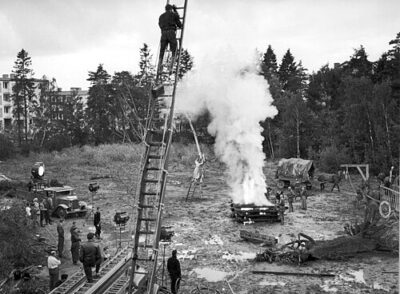
Bergman developed the screenplay from his one-act play Trämålning (Wood Painting), which had been written for the Royal Dramatic Theatre in Stockholm. The film's title is derived from the seventh seal described in the Book of Revelation, a biblical passage quoted both in the opening narration and near the conclusion of the film, while the silence that follows the opening of the seal reflects one of the film's central themes: "the silence of God". Produced by Svensk Filmindustri, The Seventh Seal was photographed by Gunnar Fischer and marked the beginning of Max von Sydow's long collaboration with Bergman. Filmed primarily at Filmstaden Studios in Solna and on location in southern Sweden, the production combined medieval allegory with existential themes influenced by Bergman's reflections on faith, mortality, and the human condition. The film's final "Dance of Death" sequence, silhouetted against the horizon, became one of the most recognizable images in the history of cinema.
The Seventh Seal premiered in Sweden on 16 February 1957 and received international recognition after winning the Special Jury Prize at the 1957 Cannes Film Festival. It established Bergman as one of the leading directors of world cinema and has since been widely regarded as one of the greatest films ever made. Its imagery and themes have had a lasting influence on popular culture, inspiring numerous homages, parodies, and critical analyses.
From the Wikipedia article “The Seventh Seal” (en.wikipedia.org/wiki/The_Seventh_Seal), by its contributors, under CC BY-SA 4.0 (creativecommons.org/licenses/by-sa/4.0/). Copied 2026-11-17; not changed.
Confirmed Two sources agree. Cited One source, and it names where it got it. One source One source, without a reference of its own. Sources disagree The sources disagree. We show the best-supported value and keep theirs below.
Picture: Louis Hutch, via Wikimedia Commons · Public domain