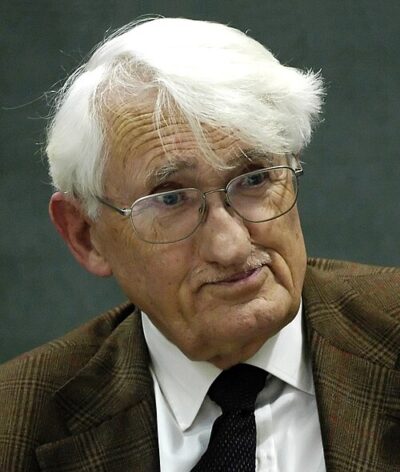
The Structural Transformation of the Public Sphere
The Structural Transformation of the Public Sphere is a non-fiction work by Jürgen Habermas. It came out in 1962.
- Published
- 1962
- Written by
- Jürgen Habermas
- Genre
- non-fiction literature
- Country of origin
- Germany
All 8 facts, and where they come from
Facts
8 facts · 0 confirmed by two sources · 1 cited · 7 from one source
Where this comes from
Papalocal keeps its own record. It started from these sources; what each one said is kept here as it was copied, so a change on their side never changes this page by itself. Tap one to read its version.
What Wikidata says · copied November 17, 2026 · revision 2564438927
- Described as
- non-fiction work by Jürgen Habermas
- Other names
- Strukturwandel der Öffentlichkeit
- What it is
- literary work; habilitation thesis
- Written by
- Jürgen Habermas
- Genre
- non-fiction literature
- Published
- 1962 · 1 reference
- Language
- German; Russian
- Country of origin
- Germany · 1 reference
- Wikipedias with a page
- 11
Wikidata item Q1535485 (wikidata.org/wiki/Q1535485), public domain (CC0). Copied 2026-11-17.
What Wikipedia says · copied November 17, 2026 · revision 1384799810
The Structural Transformation of the Public Sphere: An Inquiry into a Category of Bourgeois Society (German: Strukturwandel der Öffentlichkeit. Untersuchungen zu einer Kategorie der bürgerlichen Gesellschaft) is a 1962 book by the philosopher Jürgen Habermas. It was translated into English in 1989 by Thomas Burger and Frederick Lawrence. An important contribution to modern understanding of democracy, it is notable for "transforming media studies into a hard-headed discipline." In 2022 Habermas published a brief sequel, A New Structural Transformation of the Public Sphere and Deliberative Politics.
From the Wikipedia article “The Structural Transformation of the Public Sphere” (en.wikipedia.org/wiki/The_Structural_Transformation_of_the_Public_Sphere), by its contributors, under CC BY-SA 4.0 (creativecommons.org/licenses/by-sa/4.0/). Copied 2026-11-17; not changed.
Confirmed Two sources agree. Cited One source, and it names where it got it. One source One source, without a reference of its own. Sources disagree The sources disagree. We show the best-supported value and keep theirs below.
Picture: Suhrkamp Insel, via Wikimedia Commons · Public domain