The Tale of the Dead Princess and the Seven Knights
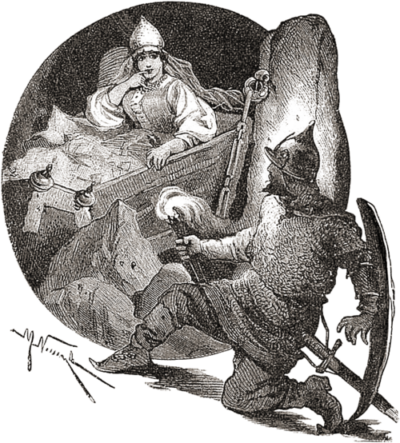
The Tale of the Dead Princess and the Seven Knights is a fairy tale by Alexander Pushkin. It came out in 1834.
- Published
- 1834
- Came out
- 1833
- Written by
- Alexander Pushkin
- Genre
- Russian fairy tales
All 8 facts, and where they come from
Facts
8 facts · 0 confirmed by two sources · 1 cited · 7 from one source
Where this comes from
Papalocal keeps its own record. It started from these sources; what each one said is kept here as it was copied, so a change on their side never changes this page by itself. Tap one to read its version.
What Wikidata says · copied November 17, 2026 · revision 2462532757
- Described as
- fairy tale by Alexander Pushkin
- Other names
- The Tale of the Dead Tsarevna and of the Seven Bogatyrs
- What it is
- literary work
- Written by
- Alexander Pushkin
- Genre
- Russian fairy tales
- Published
- 1834 · 2 references
- Language
- Russian
- Came out
- 1833
- Named after
- Tsarevna; bogatyr
- Wikipedias with a page
- 19
Wikidata item Q4421383 (wikidata.org/wiki/Q4421383), public domain (CC0). Copied 2026-11-17.
What Wikipedia says · copied November 17, 2026 · revision 1386185622
The Tale of the Dead Princess and the Seven Knights (Russian: «Сказка о мёртвой царевне и о семи богатырях», romanized: Skazka o myortvoy tsarevne i o semi bogatyryakh, literally: "The Tale of the Dead Tsarevna and of the Seven Bogatyrs") is an 1833 poem by Aleksandr Pushkin telling a fairy tale of Prince Yelisei's search for his love, the Tsarevna (princess), who has been cast out by her stepmother.
From the Wikipedia article “The Tale of the Dead Princess and the Seven Knights” (en.wikipedia.org/wiki/The_Tale_of_the_Dead_Princess_and_the_Seven_Knights), by its contributors, under CC BY-SA 4.0 (creativecommons.org/licenses/by-sa/4.0/). Copied 2026-11-17; not changed.
Confirmed Two sources agree. Cited One source, and it names where it got it. One source One source, without a reference of its own. Sources disagree The sources disagree. We show the best-supported value and keep theirs below.
Picture: М. В. Нестеров, via Wikimedia Commons · Public domain