The Tale of the Golden Cockerel
The Tale of the Golden Cockerel is a fairy tale by Alexander Pushkin. It came out in 1835.
- Published
- 1835
- Came out
- 1834
- Written by
- Alexander Pushkin
- Genre
- fairy tale
All 6 facts, and where they come from
Facts
6 facts · 0 confirmed by two sources · 0 cited · 6 from one source
Where this comes from
Papalocal keeps its own record. It started from these sources; what each one said is kept here as it was copied, so a change on their side never changes this page by itself. Tap one to read its version.
What Wikidata says · copied November 17, 2026 · revision 2462532850
- Described as
- fairy tale by Alexander Pushkin
- What it is
- literary work
- Written by
- Alexander Pushkin
- Genre
- fairy tale
- Published
- 1835
- Language
- Russian
- Came out
- 1834
- Wikipedias with a page
- 15
Wikidata item Q4421382 (wikidata.org/wiki/Q4421382), public domain (CC0). Copied 2026-11-17.
What Wikipedia says · copied November 17, 2026 · revision 1370732193
The Tale of the Golden Cockerel (Russian: Сказка о золотом петушке, romanized: Skazka o zolotom petushke) is the last fairy tale in verse by Alexander Pushkin. Pushkin wrote the tale in 1834 and it was first published in literary magazine Biblioteka dlya chteniya (Library for Reading) in 1835. While not officially based on any specific fairy tale, a number of similar stories were later revealed by scholars, most famously by Anna Akhmatova in her 1933 essay "Pushkin's Last Fairy Tale". Among the influences named were the Legend of the Arabian Astrologer from Tales of the Alhambra by Washington Irving, Der goldene Hahn (1785) by Friedrich Maximilian Klinger and Kaib (1792) by Ivan Krylov. In turn, all of them borrowed from the ancient Coptic legend first translated by the French Arabist Pierre Vattier in 1666 using the 1584 manuscript from the collection of Cardinal Mazarin.
From the Wikipedia article “The Tale of the Golden Cockerel” (en.wikipedia.org/wiki/The_Tale_of_the_Golden_Cockerel), by its contributors, under CC BY-SA 4.0 (creativecommons.org/licenses/by-sa/4.0/). Copied 2026-11-17; not changed.
Confirmed Two sources agree. Cited One source, and it names where it got it. One source One source, without a reference of its own. Sources disagree The sources disagree. We show the best-supported value and keep theirs below.
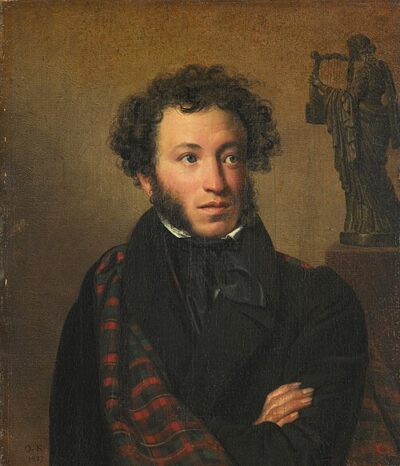
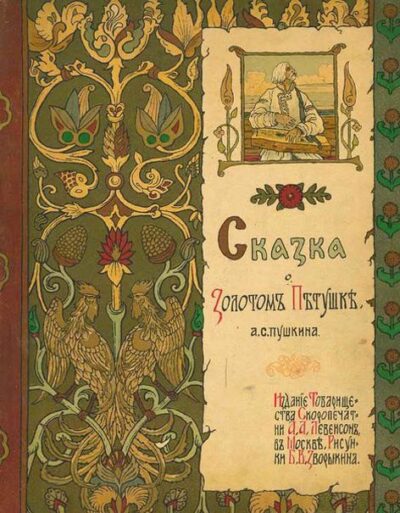
Picture: Unknown author, via Wikimedia Commons · Public domain