The Temple of the Golden Pavilion
The Temple of the Golden Pavilion is a 1956 novel by Yukio Mishima. It won the Yomiuri Prize.
- Published
- 1956
- Came out
- 1956
- Written by
- Yukio Mishima
- Genre
- psychological fiction
- Country of origin
- Japan
All 11 facts, and where they come from
Facts
11 facts · 0 confirmed by two sources · 1 cited · 10 from one source
Where this comes from
Papalocal keeps its own record. It started from these sources; what each one said is kept here as it was copied, so a change on their side never changes this page by itself. Tap one to read its version.
What Wikidata says · copied November 17, 2026 · revision 2567730391
- Described as
- 1956 novel by Yukio Mishima
- Other names
- Kinkaku-ji
- What it is
- literary work
- Written by
- Yukio Mishima
- Publisher
- Shinchosha
- Genre
- psychological fiction
- Published
- 1956
- Language
- Japanese
- Country of origin
- Japan
- Came out
- 1956 · 1 reference
- Awards
- Yomiuri Prize (1956) · 1 reference
- Named after
- Kinkaku-ji Temple
- Official website
- http://www.shinchosha.co.jp/book/105008/
- Wikipedias with a page
- 20
Wikidata item Q2518946 (wikidata.org/wiki/Q2518946), public domain (CC0). Copied 2026-11-17.
What Wikipedia says · copied November 17, 2026 · revision 1384246554
The Temple of the Golden Pavilion (金閣寺, Kinkaku-ji) is a novel by the Japanese author Yukio Mishima. It was published in 1956 and translated into English by Ivan Morris in 1959.
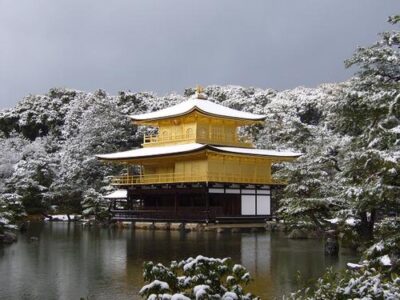
The novel is loosely based on the burning of the Reliquary (or Golden Pavilion) of Kinkaku-ji in Kyoto by a young Buddhist acolyte in 1950. The pavilion, dating from before 1400, was a national monument that had been spared destruction many times throughout history, and the arson shocked Japan.
From the Wikipedia article “The Temple of the Golden Pavilion” (en.wikipedia.org/wiki/The_Temple_of_the_Golden_Pavilion), by its contributors, under CC BY-SA 4.0 (creativecommons.org/licenses/by-sa/4.0/). Copied 2026-11-17; not changed.
Confirmed Two sources agree. Cited One source, and it names where it got it. One source One source, without a reference of its own. Sources disagree The sources disagree. We show the best-supported value and keep theirs below.
Picture: ja:Kyoto-u, via Wikimedia Commons · CC BY-SA 3.0