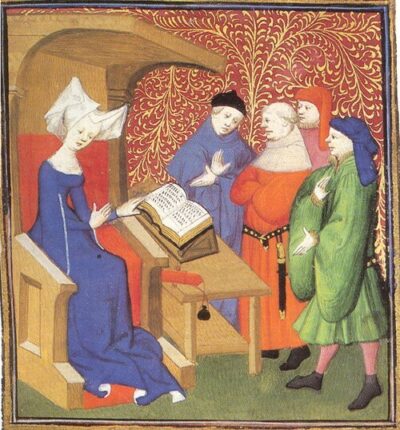
The Treasure of the City of Ladies
The Treasure of the City of Ladies is a manual of education by medieval Italian-French author Christine de Pizan. It came out in 1405.
- Published
- 1405
- Came out
- 1405
- Written by
- Christine de Pizan
- Genre
- didactic literature
All 7 facts, and where they come from
Facts
7 facts · 0 confirmed by two sources · 0 cited · 7 from one source
Where this comes from
Papalocal keeps its own record. It started from these sources; what each one said is kept here as it was copied, so a change on their side never changes this page by itself. Tap one to read its version.
What Wikidata says · copied November 17, 2026 · revision 2502467352
- Described as
- manual of education by medieval Italian-French author Christine de Pizan
- Other names
- The Book of the Three Virtues, Le livre des trois vertus, The book of the three virtus
- What it is
- literary work
- Written by
- Christine de Pizan
- Genre
- didactic literature; allegory
- Published
- 1405
- Language
- Middle French
- Came out
- 1405
- Wikipedias with a page
- 3
Wikidata item Q16765210 (wikidata.org/wiki/Q16765210), public domain (CC0). Copied 2026-11-17.
What Wikipedia says · copied November 17, 2026 · revision 1115197012
The Treasure of the City of Ladies (Le trésor de la cité des dames, also known The Book of the Three Virtues) is a manual of education by medieval Italian-French author Christine de Pisan. Finished, like her previous The Book of the City of Ladies, by the year 1405, and dedicated to Margaret of Burgundy at a time when Christine was writing works for Margaret's father Duke John the Fearless of Burgundy, the book aims to educate women of all estates with advice on various topics. Her Book and Treasure are two of her best-known works, mainly due to the study of these books in modern academia.
From the Wikipedia article “The Treasure of the City of Ladies” (en.wikipedia.org/wiki/The_Treasure_of_the_City_of_Ladies), by its contributors, under CC BY-SA 4.0 (creativecommons.org/licenses/by-sa/4.0/). Copied 2026-11-17; not changed.
Confirmed Two sources agree. Cited One source, and it names where it got it. One source One source, without a reference of its own. Sources disagree The sources disagree. We show the best-supported value and keep theirs below.
Picture: Wikimedia Commons: Pisan lelivredestroisvertus.jpg · See Commons file page