The Triumph of Bacchus
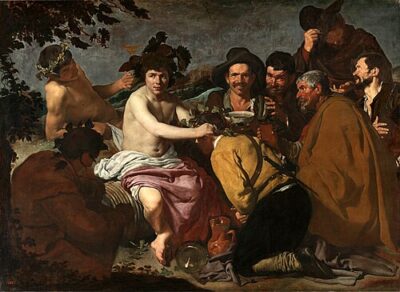
The Triumph of Bacchus is a painting by Diego Velázquez. It came out in 1628. It is based on Greek mythology.
- Came out
- 1628
- Created by
- Diego Velázquez
- Genre
- mythological painting
- Country of origin
- Spain
All 8 facts, and where they come from
Facts
8 facts · 0 confirmed by two sources · 7 cited · 1 from one source
Where this comes from
Papalocal keeps its own record. It started from these sources; what each one said is kept here as it was copied, so a change on their side never changes this page by itself. Tap one to read its version.
What Wikidata says · copied November 17, 2026 · revision 2468139715
- Described as
- painting by Diego Velázquez
- What it is
- painting · 1 reference
- Created by
- Diego Velázquez · 1 reference
- Genre
- mythological painting · 1 reference
- Country of origin
- Spain · 1 reference
- Based on
- Greek mythology · 1 reference
- Came out
- 1628 · 1 reference
- Country
- Spain · 1 reference
- Owned by
- Ferdinand VII of Spain (1814) · 1 reference
- Wikipedias with a page
- 21
Wikidata item Q123935 (wikidata.org/wiki/Q123935), public domain (CC0). Copied 2026-11-17.
What Wikipedia says · copied November 17, 2026 · revision 1361434836
The Triumph of Bacchus (Greek: Ο Θρίαμβος του Βάκχου) is a painting by Diego Velázquez, now in the Museo del Prado, in Madrid. It is popularly known as Los borrachos or The Drinkers (also The Drunks).
Velázquez painted The Triumph of Bacchus after arriving in Madrid from Seville and just before his voyage to Italy. The work was painted for Philip IV, who paid Velázquez 100 ducats for it. The painting shows Bacchus surrounded by drunks. In Madrid, Velázquez was able to study the king's collection of Italian paintings and was no doubt struck by the nudity in many paintings as well as the treatment of mythological subjects.
The Triumph of Bacchus has been described as the masterpiece of Velázquez's 1620s paintings.
From the Wikipedia article “The Triumph of Bacchus” (en.wikipedia.org/wiki/The_Triumph_of_Bacchus), by its contributors, under CC BY-SA 4.0 (creativecommons.org/licenses/by-sa/4.0/). Copied 2026-11-17; not changed.
Confirmed Two sources agree. Cited One source, and it names where it got it. One source One source, without a reference of its own. Sources disagree The sources disagree. We show the best-supported value and keep theirs below.
Picture: Diego Velázquez, via Wikimedia Commons · Public domain