The Varieties of Religious Experience
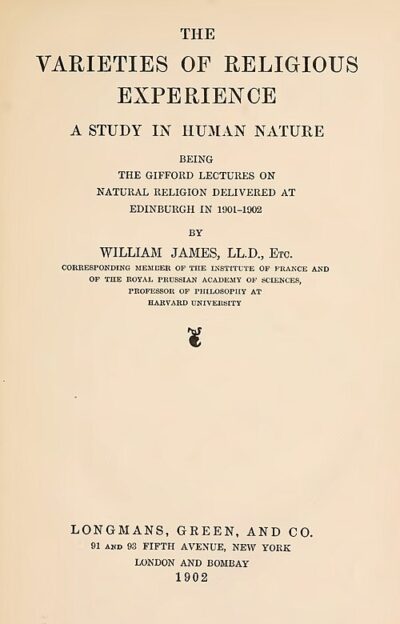
The Varieties of Religious Experience is an essay by William James. It came out in 1902.
- Published
- 1902
- Came out
- 1902
- Written by
- William James
- Genre
- essay
- Country of origin
- United States
All 8 facts, and where they come from
Facts
8 facts · 0 confirmed by two sources · 0 cited · 8 from one source
Where this comes from
Papalocal keeps its own record. It started from these sources; what each one said is kept here as it was copied, so a change on their side never changes this page by itself. Tap one to read its version.
What Wikidata says · copied November 16, 2026 · revision 2494144075
- Described as
- essay by William James
- What it is
- literary work
- Written by
- William James
- Publisher
- Longman
- Genre
- essay · 1 reference
- Published
- 1902 · 1 reference
- Language
- English
- Country of origin
- United States · 1 reference
- Came out
- 1902
- Wikipedias with a page
- 17
Wikidata item Q2605035 (wikidata.org/wiki/Q2605035), public domain (CC0). Copied 2026-11-16.
What Wikipedia says · copied November 16, 2026 · revision 1384426047
The Varieties of Religious Experience: A Study in Human Nature is a book by Harvard University psychologist and philosopher William James. It comprises his edited Gifford Lectures on natural theology, which were delivered at the University of Edinburgh, Scotland, between 1901 and 1902. The lectures concerned the psychological study of individual private religious experiences and mysticism, and used a range of examples to identify commonalities in religious experiences across traditions.
Soon after its publication, Varieties entered the Western canon of psychology and philosophy and has remained in print for over a century.
James later developed his philosophy of pragmatism. There are many overlapping ideas in Varieties and his 1907 book Pragmatism.
From the Wikipedia article “The Varieties of Religious Experience” (en.wikipedia.org/wiki/The_Varieties_of_Religious_Experience), by its contributors, under CC BY-SA 4.0 (creativecommons.org/licenses/by-sa/4.0/). Copied 2026-11-16; not changed.
Confirmed Two sources agree. Cited One source, and it names where it got it. One source One source, without a reference of its own. Sources disagree The sources disagree. We show the best-supported value and keep theirs below.
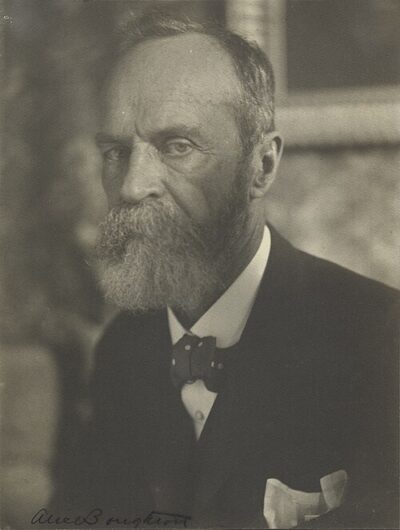
Picture: William James, via Wikimedia Commons · Public domain