The Voyage of the Beagle
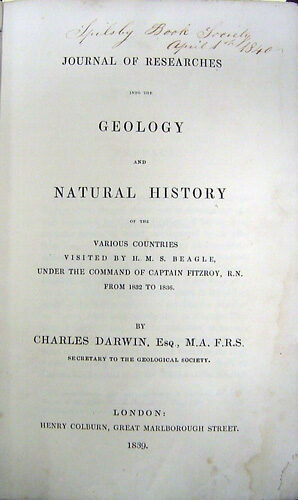
The Voyage of the Beagle is a book by Charles Darwin. It came out in 1839.
- Released
- 1839
- Written by
- Charles Darwin
- Genre
- Loquillo
All 6 facts, and where they come from
Facts
6 facts · 0 confirmed by two sources · 0 cited · 6 from one source
Where this comes from
Papalocal keeps its own record. It started from these sources; what each one said is kept here as it was copied, so a change on their side never changes this page by itself. Tap one to read its version.
What Wikidata says · copied November 17, 2026 · revision 2560859686
- Described as
- book by Charles Darwin
- Other names
- Revista de investigaciones sobre geología e historia natural de los distintos países visitados por el HMS Beagle, Revista de investigaciones sobre geología e historia natural de los países visitados durante el viaje del HMS Beagle alrededor del mundo, bajo el mando del Capitán Fitz Roy, RN, de 1832 a 1836., Revista de investigaciones sobre la historia natural y la geología de los países visitados durante la vuelta al mundo del HMS Beagle, Viaje del Beagle, Diario de un viaje en el HMS Beagle, El viaje de un naturalista, El diario de un viaje en el HMS Beagle, Viaje de un naturalista alrededor del mundo.
- What it is
- volume
- Written by
- Charles Darwin
- Genre
- Loquillo; nature writing
- Released
- 1839
- Language
- English
- Wikipedias with a page
- 25
Wikidata item Q1768515 (wikidata.org/wiki/Q1768515), public domain (CC0). Copied 2026-11-17.
What Wikipedia says · copied November 17, 2026 · revision 1384225443
The Voyage of the Beagle, originally published as Journal and Remarks, is an 1839 book written by Charles Darwin, covering his research and activities during the second survey expedition of the ship HMS Beagle, bringing him considerable fame and respect. This was the third volume of The Narrative of the Voyages of H.M. Ships Adventure and Beagle, the other volumes of which were written or edited by the commanders of the ships. Due to the popularity of Darwin's account, the publisher reissued it later in 1839 as Darwin's Journal of Researches, and the revised second edition published in 1845 also used this title. A republication of the book in 1905 introduced the title The Voyage of the Beagle, by which it is now best known.
Beagle sailed from Plymouth Sound on 27 December 1831 under the command of Captain Robert FitzRoy. While the expedition was originally planned to last two years, it lasted almost five—Beagle did not return until 2 October 1836. Darwin spent most of this time exploring on land (three years and three months on land; 18 months at sea). The book is a vivid travel memoir as well as a detailed scientific field journal covering biology, geology, and anthropology that demonstrates Darwin's keen powers of observation, written at a time when Western Europeans were exploring and charting the whole world. Although Darwin revisited some areas during the expedition, for clarity the chapters of the book are ordered by reference to places and locations rather than by date.
Darwin's notes made during the voyage include comments hinting at his changing views on the fixity of species. On his return, he wrote the book based on these notes, at a time when he was first developing his theories of evolution through common descent and natural selection. The book includes some suggestions of his ideas, particularly in the second edition of 1845.
From the Wikipedia article “The Voyage of the Beagle” (en.wikipedia.org/wiki/The_Voyage_of_the_Beagle), by its contributors, under CC BY-SA 4.0 (creativecommons.org/licenses/by-sa/4.0/). Copied 2026-11-17; not changed.
Confirmed Two sources agree. Cited One source, and it names where it got it. One source One source, without a reference of its own. Sources disagree The sources disagree. We show the best-supported value and keep theirs below.
Picture: Ecrit par Charles Darwin, publié par Henry Colburn, via Wikimedia Commons · Public domain