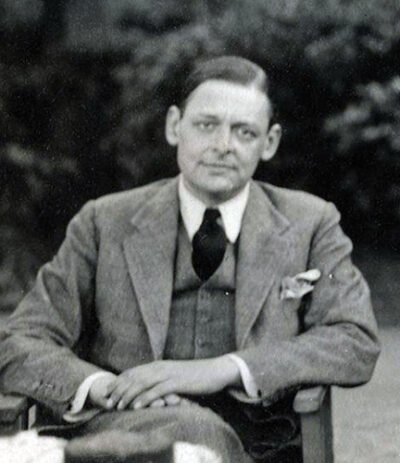
The Waste Land
The Waste Land is a poem by T.S. Eliot. It came out in 1922. It was written by T. S. Eliot.
- Published
- 1922
- Written by
- T. S. Eliot
- Genre
- poetry
- Country of origin
- United States
All 9 facts, and where they come from
Facts
9 facts · 0 confirmed by two sources · 1 cited · 8 from one source
Where this comes from
Papalocal keeps its own record. It started from these sources; what each one said is kept here as it was copied, so a change on their side never changes this page by itself. Tap one to read its version.
What Wikidata says · copied November 16, 2026 · revision 2555907912
- Described as
- poem by T.S. Eliot
- What it is
- written work; narrative poetry
- Written by
- T. S. Eliot
- Publisher
- Horace Liveright
- Genre
- poetry · 1 reference
- Published
- 1922 · 1 reference
- Language
- English
- Country of origin
- United States; England
- Wikipedias with a page
- 37
Wikidata item Q581458 (wikidata.org/wiki/Q581458), public domain (CC0). Copied 2026-11-16.
What Wikipedia says · copied November 16, 2026 · revision 1378186181
The Waste Land is a poem by T. S. Eliot, widely regarded as one of the most important English-language poems of the 20th century and a central work of modernist poetry. Published in 1922, the 434-line poem first appeared in the United Kingdom in the October issue of Eliot's magazine The Criterion and in the United States in the November issue of The Dial. Among its famous phrases are "April is the cruellest month", "I will show you fear in a handful of dust", and "These fragments I have shored against my ruins".
The Waste Land does not follow a single narrative or feature a consistent style or structure. The poem shifts between voices of satire and prophecy, and features abrupt and unannounced changes of narrator, location, and time, conjuring a vast and dissonant range of cultures and literatures. It employs many allusions to the Western canon: Ovid's Metamorphoses, the legend of the Fisher King, Dante's Divine Comedy, Chaucer's Canterbury Tales, and even a contemporary popular song, "That Shakespearian Rag".
The poem is divided into five sections. The first, "The Burial of the Dead", introduces the diverse themes of disillusionment and despair. The second, "A Game of Chess", employs alternating narrations in which vignettes of several characters display the fundamental emptiness of their lives. "The Fire Sermon" offers a philosophical meditation in relation to self-denial and sexual dissatisfaction; "Death by Water" is a brief description of a drowned merchant; and "What the Thunder Said" is a culmination of the poem's previously exposited themes explored through a description of a desert journey.
Upon its initial publication The Waste Land received a mixed response, with some critics finding it wilfully obscure while others praised its originality. Subsequent years saw the poem become established as a central work in the modernist canon, and it proved to become one of the most influential works of the century.
From the Wikipedia article “The Waste Land” (en.wikipedia.org/wiki/The_Waste_Land), by its contributors, under CC BY-SA 4.0 (creativecommons.org/licenses/by-sa/4.0/). Copied 2026-11-16; not changed.
Confirmed Two sources agree. Cited One source, and it names where it got it. One source One source, without a reference of its own. Sources disagree The sources disagree. We show the best-supported value and keep theirs below.
Picture: Wikimedia Commons: The waste land(1922)Eliot Boni.djvu · See Commons file page