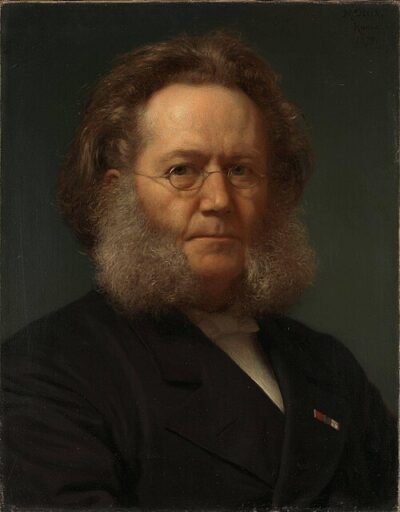
The Wild Duck
The Wild Duck is a play in five acts by Henrik Ibsen from 1884.
- Released
- November 11, 1884
- Came out
- 1884
- Written by
- Henrik Ibsen
All 5 facts, and where they come from
Facts
5 facts · 0 confirmed by two sources · 5 cited · 0 from one source
Where this comes from
Papalocal keeps its own record. It started from these sources; what each one said is kept here as it was copied, so a change on their side never changes this page by itself. Tap one to read its version.
What Wikidata says · copied November 17, 2026 · revision 2568287636
- Described as
- play in five acts by Henrik Ibsen from 1884
- What it is
- dramatic work · 1 reference
- Written by
- Henrik Ibsen · 1 reference
- Released
- November 11, 1884 · 2 references
- Language
- Norwegian · 1 reference
- Came out
- 1884 · 1 reference
- Wikipedias with a page
- 26
Wikidata item Q1217608 (wikidata.org/wiki/Q1217608), public domain (CC0). Copied 2026-11-17.
What Wikipedia says · copied November 17, 2026 · revision 1380487845
The Wild Duck (Norwegian: Vildanden) is an 1884 play by the Norwegian playwright Henrik Ibsen. It focuses on the Ekdal family, whose fragile peace is shattered by Gregers Werle, an idealist who insists on exposing hidden truths, leading to tragic consequences. The play was written in a realistic style, but literary scholars have pointed out the play's kinship with symbolism. It blends themes such as deception, betrayal, and the disillusionment of modern life with moments of comedy and satire, and is considered the first modern masterpiece in the genre of tragicomedy. According to Ibsen scholar and translator James McFarlane, The Wild Duck and Rosmersholm are "often to be observed in the critics' estimates vying with each other as rivals for the top place among Ibsen's works".
Themes of visibility and recognition permeate the narrative, featuring characters struggling to be seen while metaphorically and literally blind to each other's true selves, symbolized through motifs such as blindness, photography, and the wounded wild duck. Like other Ibsen plays, it is rich with references to Ibsen's family; "Old Ekdal" is a literary portrait of the playwright's father Knud Ibsen. The character "Gregers Werle" represents the spirit of the Paus family and Upper Telemark, a broader theme that is found in many of Ibsen's plays.
From the Wikipedia article “The Wild Duck” (en.wikipedia.org/wiki/The_Wild_Duck), by its contributors, under CC BY-SA 4.0 (creativecommons.org/licenses/by-sa/4.0/). Copied 2026-11-17; not changed.
Confirmed Two sources agree. Cited One source, and it names where it got it. One source One source, without a reference of its own. Sources disagree The sources disagree. We show the best-supported value and keep theirs below.
Picture: Wikimedia Commons: Vildanden.jpg · See Commons file page