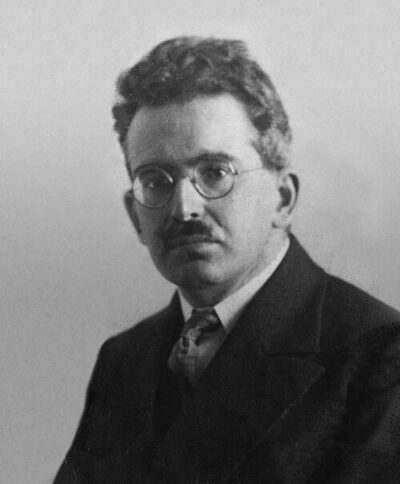
The Work of Art in the Age of Mechanical Reproduction
The Work of Art in the Age of Mechanical Reproduction is a 1935 essay by Walter Benjamin; proposes that mechanical reproduction devalues the aura of an artwork, that—in the age of mechanical reproduction and traditional ritualistic value’s absence—art production would be inherently based on political praxis. It came out in 1936.
- Published
- 1936
- Came out
- 1936
- Written by
- Walter Benjamin
- Genre
- essay
- Country of origin
- Germany
All 10 facts, and where they come from
Facts
10 facts · 0 confirmed by two sources · 0 cited · 10 from one source
Where this comes from
Papalocal keeps its own record. It started from these sources; what each one said is kept here as it was copied, so a change on their side never changes this page by itself. Tap one to read its version.
What Wikidata says · copied November 17, 2026 · revision 2555915330
- Described as
- 1935 essay by Walter Benjamin; proposes that mechanical reproduction devalues the aura of an artwork, that—in the age of mechanical reproduction and traditional ritualistic value’s absence—art production would be inherently based on political praxis
- Other names
- The work of art in the age of its technological reproducibility
- What it is
- literary work; chapter
- Written by
- Walter Benjamin
- Genre
- essay; Philosophical Writings
- Published
- 1936
- Language
- German
- Country of origin
- Germany
- Came out
- 1936
- Official website
- https://www.marxists.org/reference/subject/philosophy/works/ge/benjamin.htm · 1 reference
- Wikipedias with a page
- 23
Wikidata item Q1169425 (wikidata.org/wiki/Q1169425), public domain (CC0). Copied 2026-11-17.
What Wikipedia says · copied November 17, 2026 · revision 1385343627
"The Work of Art in the Age of Mechanical Reproduction" (German: Das Kunstwerk im Zeitalter seiner technischen Reproduzierbarkeit; 1935), by Walter Benjamin, is an essay of cultural criticism which proposes and explains that mechanical reproduction devalues the aura (uniqueness) of a work of art, and that in the age of mechanical reproduction and the absence of traditional and ritualistic values, the production of art would be inherently based upon the praxis of politics.
The essay was written during the Nazi régime (1933–1945) in Germany. Its first draft was composed in 1935 during the year that the Nuremberg Race Laws were passed in the Third Reich and Leni Riefenstahl's film documentary of the Nuremberg Rally (Triumph of the Will) debuted to critical praise, sweeping the film awards across Europe. The essay presents a theory of art that is "useful for the formulation of revolutionary demands in the politics of art" in a mass culture. It remains a prophetic and trenchantly anti-fascist manifesto, instructing readers in the interpretation of mass cultural forms inclined towards the fertilization and acceleration of totalitarianism.
Benjamin's essay is concerned with several ideas: the aura of a work of art; the artistic authenticity of the artefact; the cultural authority of the work of art; and the aestheticization of politics for the production of art. As a result, it has become a foundational theoretical resource in the fields of art history and architectural theory, cultural studies, and media theory.
From the Wikipedia article “The Work of Art in the Age of Mechanical Reproduction” (en.wikipedia.org/wiki/The_Work_of_Art_in_the_Age_of_Mechanical_Reproduction), by its contributors, under CC BY-SA 4.0 (creativecommons.org/licenses/by-sa/4.0/). Copied 2026-11-17; not changed.
Confirmed Two sources agree. Cited One source, and it names where it got it. One source One source, without a reference of its own. Sources disagree The sources disagree. We show the best-supported value and keep theirs below.