Théodicée
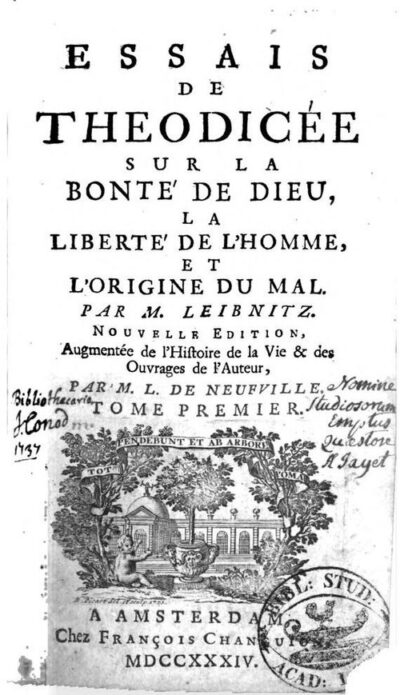
Théodicée is a book by Gottfried Wilhelm Leibniz. It came out in 1710.
- Published
- 1710
- Written by
- Gottfried Wilhelm Leibniz
- Genre
- religious philosophy
All 5 facts, and where they come from
Facts
5 facts · 0 confirmed by two sources · 0 cited · 5 from one source
Where this comes from
Papalocal keeps its own record. It started from these sources; what each one said is kept here as it was copied, so a change on their side never changes this page by itself. Tap one to read its version.
What Wikidata says · copied November 17, 2026 · revision 2555124800
- Described as
- book by Gottfried Wilhelm Leibniz
- Other names
- Theodicy, Theodicee, Essays of Theodicy on the goodness of god, the freedom of man and the origin of evil, Theodicy, essays on the goodness of god, the freedom of man and the origin of evil
- What it is
- written work
- Written by
- Gottfried Wilhelm Leibniz
- Genre
- religious philosophy
- Published
- 1710
- Language
- French
- Wikipedias with a page
- 16
Wikidata item Q2166858 (wikidata.org/wiki/Q2166858), public domain (CC0). Copied 2026-11-17.
What Wikipedia says · copied November 17, 2026 · revision 1385125130
Essais de Théodicée sur la bonté de Dieu, la liberté de l'homme et l'origine du mal (from French: Essays of Theodicy on the Goodness of God, the Freedom of Man and the Origin of Evil), more simply known as Théodicée [te.ɔ.di.se], is a book of philosophy by the German polymath Gottfried Leibniz. The book, published in 1710, introduced the term theodicy, and its optimistic approach to the problem of evil is thought to have inspired Voltaire's Candide (albeit satirically). Much of the work consists of a response to the ideas of the French philosopher Pierre Bayle and based on the author's conversation with Sophia Charlotte of Hanover, with whom Leibniz carried on a debate for many years.
Théodicée was the only book Leibniz published during his lifetime; his other book, New Essays on Human Understanding, was published after his death, in 1765.
From the Wikipedia article “Théodicée” (en.wikipedia.org/wiki/Théodicée), by its contributors, under CC BY-SA 4.0 (creativecommons.org/licenses/by-sa/4.0/). Copied 2026-11-17; not changed.
Confirmed Two sources agree. Cited One source, and it names where it got it. One source One source, without a reference of its own. Sources disagree The sources disagree. We show the best-supported value and keep theirs below.
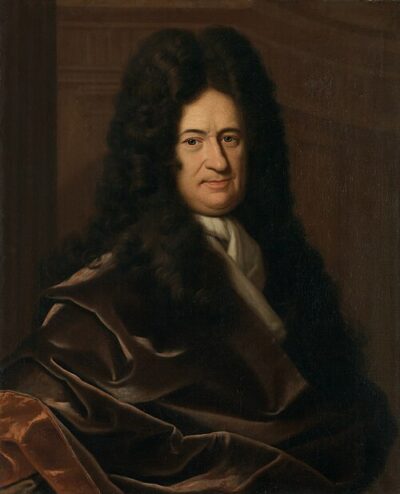
Picture: Unknown author, via Wikimedia Commons · Public domain