

Third Merkel cabinet
Third Merkel cabinet is a third government of Germany under Angela Merkel. It was founded in 2013.
- Founded
- December 17, 2013
- Country
- Germany
All 6 facts, and where they come from
Facts
6 facts · 0 confirmed by two sources · 0 cited · 6 from one source
Where this comes from
Papalocal keeps its own record. It started from these sources; what each one said is kept here as it was copied, so a change on their side never changes this page by itself. Tap one to read its version.
What Wikidata says · copied November 17, 2026 · revision 2566210256
- Described as
- third government of Germany under Angela Merkel
- What it is
- Government of the Federal Republic of Germany
- Founded
- December 17, 2013
- Ended
- March 14, 2018
- Country
- Germany
- Office of
- Germany
- Official website
- http://www.bundesregierung.de/Webs/Breg/DE/Homepage/home.html · 1 reference
- Wikipedias with a page
- 34
Wikidata item Q15094515 (wikidata.org/wiki/Q15094515), public domain (CC0). Copied 2026-11-17.
What Wikipedia says · copied November 17, 2026 · revision 1386075963
The Third Merkel cabinet (German: Kabinett Merkel III) was the 22nd Government of the Federal Republic of Germany during the 18th legislative session of the Bundestag. Installed after the 2013 federal election, it left office on 14 March 2018. It was preceded by the second Merkel cabinet and succeeded by the fourth Merkel cabinet. Led by Chancellor Angela Merkel. The government was supported by a coalition of the Christian Democratic Union (CDU), the Christian Social Union of Bavaria (CSU) and the Social Democrats (SPD). Sigmar Gabriel (SPD) replaced Philipp Rösler (FDP) as Vice Chancellor of Germany and became Federal Minister for Economics and Energy.
The CDU received five ministries in addition to the positions of Chancellor, as well as Chancellery Chief of Staff and Minister for Special Affairs. The SPD controlled six ministries and the CSU three. Although the CSU received a disproportionate share of ministries relative to its weight in the Bundestag, the six most powerful ministries were divided equally between the CDU and the SPD: the CDU controlled the ministries for finance, internal affairs and defense, while the SPD controlled the ministries for foreign affairs, economics and energy, as well as justice and consumer protection.
The term of office of the third Merkel cabinet officially ended with the constitution of the 19th Bundestag on Tuesday, 24 October 2017. Merkel and her cabinet ministers received their discharge papers from the Federal President Frank-Walter Steinmeier on the same day. In accordance with Article 69 of the German Constitution and at the request of the President of Germany, the cabinet remained in office as the caretaker government until a new government is formed.
From the Wikipedia article “Third Merkel cabinet” (en.wikipedia.org/wiki/Third_Merkel_cabinet), by its contributors, under CC BY-SA 4.0 (creativecommons.org/licenses/by-sa/4.0/). Copied 2026-11-17; not changed.
Confirmed Two sources agree. Cited One source, and it names where it got it. One source One source, without a reference of its own. Sources disagree The sources disagree. We show the best-supported value and keep theirs below.
Picture: Wikimedia Commons: Bundesregierung (Tobias Koch).jpg · See Commons file page
People connected 12
Members
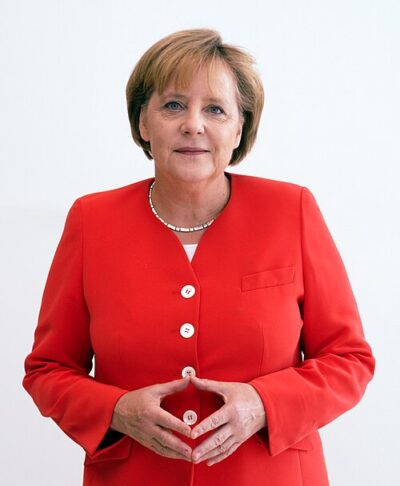 Angela Merkel (2013–2018)chancellor of Germany from 2005 to 2021 (born 1954)
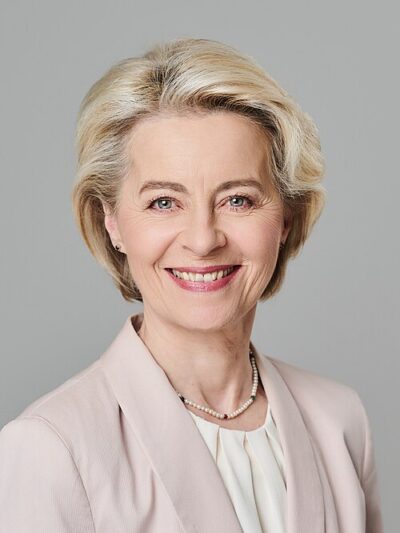 Ursula von der LeyenPresident of the European Commission since 2019
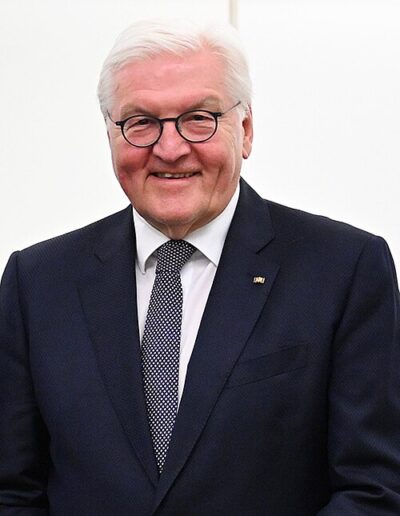 Frank-Walter SteinmeierGerman politician, president of Germany since 2017
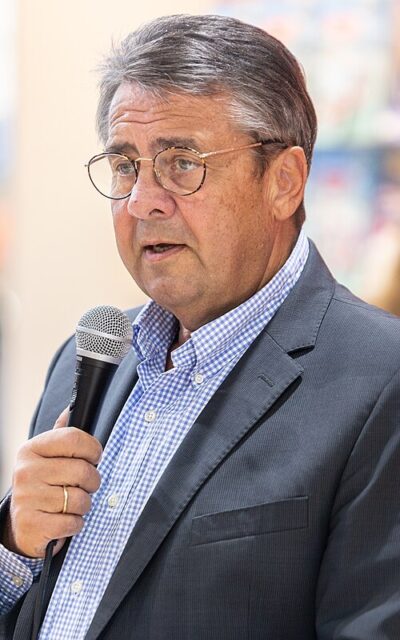 Sigmar GabrielGerman politician (SPD)
 Thomas de MaizièreGerman politician
 Andrea NahlesGerman politician
 Manuela SchwesigGerman politician (SPD), Minister President of Mecklenburg-Vorpommern
 Katarina BarleyGerman politician
 Christian SchmidtGerman politician, High Representative for Bosnia and Herzegovina
 Peter AltmaierGerman politician
 Alexander DobrindtGerman politician
 Brigitte ZypriesGerman politician
