Three Essays on the Theory of Sexuality
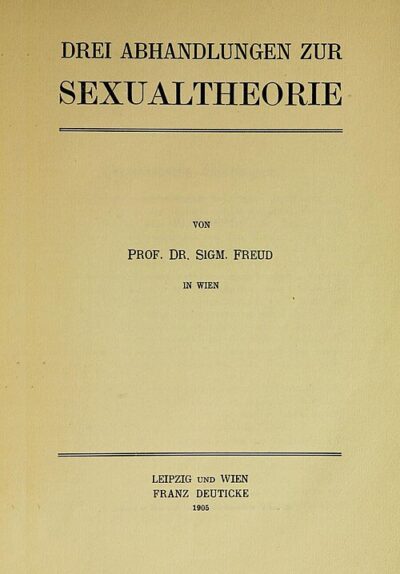
Three Essays on the Theory of Sexuality is a 1905 work by Sigmund Freud. It won the Le Monde's 100 Books of the Century.
- Published
- 1905
- Written by
- Sigmund Freud
- Genre
- specialized literature
- Country of origin
- Austria
All 8 facts, and where they come from
Facts
8 facts · 0 confirmed by two sources · 0 cited · 8 from one source
Where this comes from
Papalocal keeps its own record. It started from these sources; what each one said is kept here as it was copied, so a change on their side never changes this page by itself. Tap one to read its version.
What Wikidata says · copied November 17, 2026 · revision 2507948482
- Described as
- 1905 work by Sigmund Freud
- What it is
- written work
- Written by
- Sigmund Freud
- Genre
- specialized literature; essay · 1 reference
- Published
- 1905
- Language
- German
- Country of origin
- Austria · 1 reference
- Awards
- Le Monde's 100 Books of the Century
- Wikipedias with a page
- 21
Wikidata item Q673747 (wikidata.org/wiki/Q673747), public domain (CC0). Copied 2026-11-17.
What Wikipedia says · copied November 17, 2026 · revision 1384237111
Three Essays on the Theory of Sexuality (German: Drei Abhandlungen zur Sexualtheorie), sometimes titled Three Contributions to the Theory of Sex, is a 1905 work by Sigmund Freud, the founder of psychoanalysis, in which the author advances his theory of sexuality, in particular its relation to childhood.
From the Wikipedia article “Three Essays on the Theory of Sexuality” (en.wikipedia.org/wiki/Three_Essays_on_the_Theory_of_Sexuality), by its contributors, under CC BY-SA 4.0 (creativecommons.org/licenses/by-sa/4.0/). Copied 2026-11-17; not changed.
Confirmed Two sources agree. Cited One source, and it names where it got it. One source One source, without a reference of its own. Sources disagree The sources disagree. We show the best-supported value and keep theirs below.
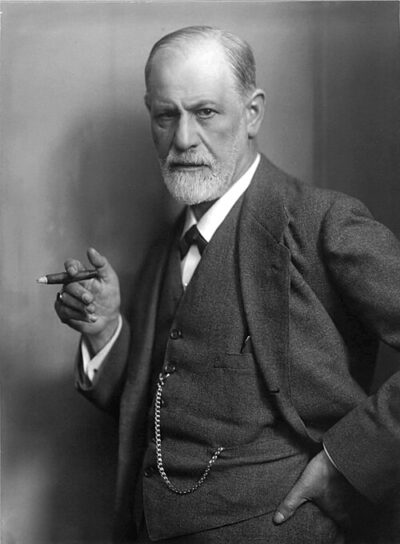
Picture: Sigmund Freud, via Wikimedia Commons · Public domain