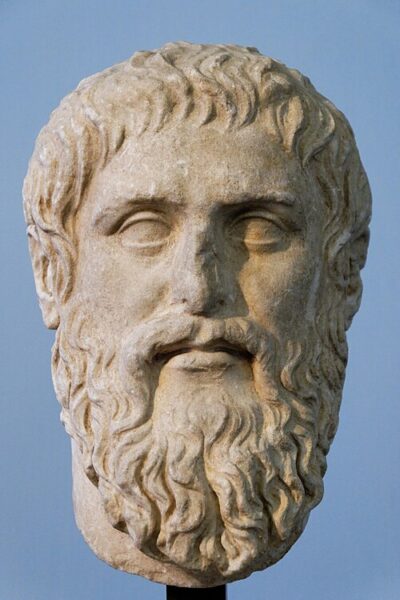
Timaeus
Timaeus is a dialogue by Plato. It came out in -360. It is part of Platonic dialogue.
- Published
- 360 BC
- Written by
- Plato
- Genre
- Socratic dialogue
All 7 facts, and where they come from
Facts
7 facts · 0 confirmed by two sources · 2 cited · 5 from one source
Where this comes from
Papalocal keeps its own record. It started from these sources; what each one said is kept here as it was copied, so a change on their side never changes this page by itself. Tap one to read its version.
What Wikidata says · copied November 17, 2026 · revision 2561582226
- Described as
- dialogue by Plato
- Other names
- Plat. Tim.
- What it is
- written work; Platonic dialogue
- Written by
- Plato · 1 reference
- Genre
- Socratic dialogue
- Published
- 360 BC
- Language
- Ancient Greek · 1 reference
- Part of the series
- Platonic dialogue · 1 reference
- Wikipedias with a page
- 45
Wikidata item Q371884 (wikidata.org/wiki/Q371884), public domain (CC0). Copied 2026-11-17.
What Wikipedia says · copied November 17, 2026 · revision 1373405450
Timaeus (; Ancient Greek: Τίμαιος, romanized: Timaios, pronounced [tǐːmai̯os]), written c. 360 BC, is one of Plato's dialogues, mostly in the form of long speeches by Timaeus and Critias. It is perhaps most noteworthy for its argument for the existence of a "craftsman" (Demiurge, Gk. demiourgos) by Timaeus. The speech goes on to present cosmological speculations about a World Soul, the creation of the earth and the heavenly spheres, the created gods, man, and finally animals. The dialogue begins with a shorter speech by Critias, unrelated to the later cosmological themes, about the myth of Atlantis and an earlier golden age of Athens.
The dramatic setting of the Timaeus is unusual for Plato's dialogues. Participants in the dialogue include Socrates, Timaeus, Hermocrates, and Critias. Socrates praises his three interlocutors as distinguished intellectuals. At the beginning of the dialogue, the absence of another, unnamed participant, who was present on the day before, is bemoaned. Timaeus gives the first long speech of the day, and occupies most of the eponymous work. The dialogue Critias follows it, as in a series, recounting the second long speech of the day. Scholars frequently speculate that Plato planned a third work, a Hermocrates. Since we have the Critias only in an unfinished form, it is thought that Plato never finished such a three-part work.
From the Wikipedia article “Timaeus (dialogue)” (en.wikipedia.org/wiki/Timaeus_(dialogue)), by its contributors, under CC BY-SA 4.0 (creativecommons.org/licenses/by-sa/4.0/). Copied 2026-11-17; not changed.
Confirmed Two sources agree. Cited One source, and it names where it got it. One source One source, without a reference of its own. Sources disagree The sources disagree. We show the best-supported value and keep theirs below.
Picture: Wikimedia Commons: Plato Timaeus.jpg · See Commons file page